Every year, thousands of aspiring entrepreneurs turn to dropshipping because it offers a low-cost way to start an online business.
Unlike traditional retail, you don’t need to buy inventory upfront or manage a warehouse. Instead, products are shipped directly from a supplier to your customer after an order is placed.
That simplicity makes dropshipping attractive, but it also creates misconceptions. While the business model reduces some startup costs, success still depends on selecting the right products, finding reliable suppliers, and developing an effective marketing strategy.
In this guide, you’ll learn what dropshipping is, how it works, its pros and cons, startup costs, and the steps needed to start a profitable dropshipping business in 2026.
What Is Dropshipping?
So what is dropshipping, really?
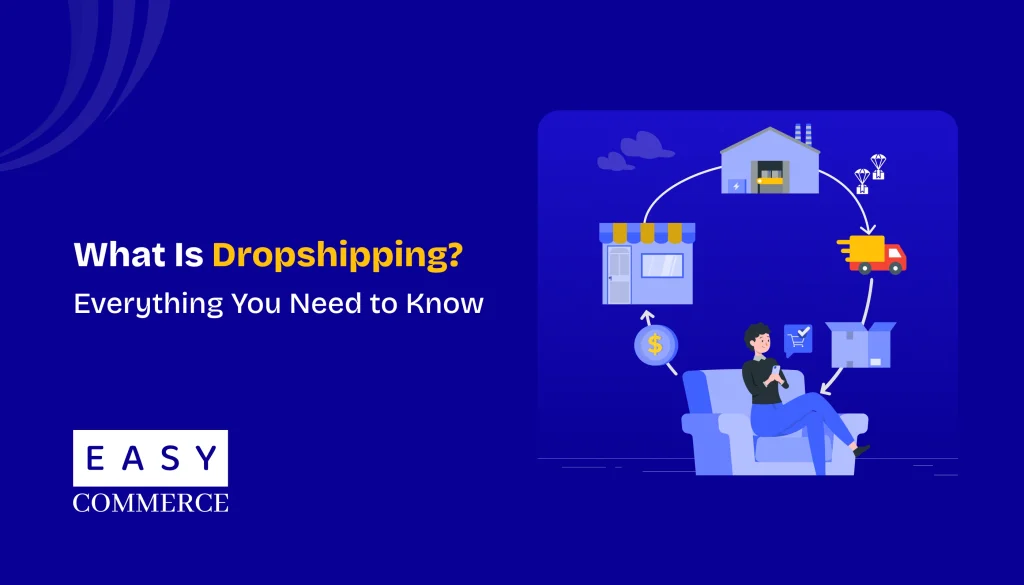
In plain terms, Dropshipping is a retail method where you sell products you don’t keep in stock. When someone buys from your store, you forward that order to a supplier; the supplier ships it directly to the customer, and you keep the difference between what the customer paid and what the supplier charged.
No warehouse. No boxes of unsold inventory in your spare room. No money tied up in products before anyone has bought them. You run the storefront; the supplier handles the physical side.
It isn’t a new idea, either. Mail-order catalogs used the same direct-ship logic decades ago. The internet just made it possible for one person with a laptop to do what used to take a warehouse and a logistics team.
The three people in every sale
Every dropshipping order involves three parties, and knowing who does what clears up most of the confusion:
- You are the store and the brand. Customers see your name, your prices, and your policies. Legally and reputationally, the sale is yours.
- Your customer buys from you and expects you to handle everything, exactly like any other shop. They usually have no idea a separate supplier is involved.
- Your supplier stores the product, packs it, and ships it, often with your branding on the package. To the customer, they’re invisible.
The thing beginners underestimate is how much of the experience still rests on you. The supplier ships the box, but you own every refund request, every “where’s my order” email, and every one-star review.
How is it different from a normal online store?
A traditional retailer buys stock upfront, stores it, and ships it themselves. They carry the risk of unsold inventory but keep tighter control over quality and delivery speed.
Print-on-demand is a close cousin of dropshipping: products like t-shirts or mugs are made to order with your design, then shipped. A lot of print-on-demand fulfillment happens in domestic warehouses, which (as you’ll see) matters a great deal in 2026.
Wholesale is the opposite trade-off. You buy in bulk at a lower per-unit cost, which improves margins but ties up cash and shifts the risk back onto you. Many sellers actually start with dropshipping to test which products sell, then move winners to wholesale once demand is proven.
How Does Dropshipping Work?
01. What happens when someone places an order
The mechanics are simpler than the marketing makes them sound:
- You partner with a supplier and list their products in your store at prices you set.
- A customer discovers your store through ads, search, or social media and places an order.
- Once payment clears, you pass the order to your supplier (automatically, if you use the right tools).
- The supplier packs and ships the product directly to your customer.
- You handle tracking, questions, and returns, and work to turn that buyer into a repeat customer.
Automation tools sit on top of this flow, syncing stock levels, pushing orders to suppliers instantly, and updating tracking. They don’t remove your job. They free you up to spend time on the parts that actually grow a store: marketing, product selection, and service.
02. How you actually make money
Your profit is what’s left after the costs come out. A customer pays you $40 for a product that costs $18 from your supplier, $5 to ship, roughly $1.50 in payment processing, and a chunk in advertising to win the sale. What remains is yours.
That “what remains” is smaller than most people expect. Across an analysis of more than 1,200 dropshipping stores, typical net margins land between 15% and 25% once every cost is counted. Refunds and rising ad prices are the two silent profit-killers, and a single bad advertising month can wipe out the gains from a good one.
Sellers who stick around stop obsessing over single sales and start thinking about customer lifetime value. One buyer who comes back three times is worth far more than three strangers who buy once and vanish.
03. Who handles returns and problems?
You do. This is the part the highlight reels skip.
When a package arrives damaged, ships late, or never shows up, the customer emails you, not the supplier. Your refund policy applies, your reputation takes the hit, and your response time decides whether that customer ever returns.
It’s why supplier choice is the single most consequential decision you’ll make. Industry data shows that 84% of sellers name finding reliable suppliers as their hardest challenge, and the same research found 62% of shoppers now expect delivery within three days. Slow, sloppy fulfillment doesn’t just annoy customers. It quietly bleeds your margins through refunds and chargebacks.
Dropshipping by the Numbers (2026)
Before you decide anything, it helps to see the model honestly, figures and all. Here’s where things stand in 2026:
- A large, fast-growing market. Estimates vary by source, but most put the global dropshipping market somewhere in the $400-$590 billion range for 2026, growing more than 20% a year. One widely cited estimate puts it near $543 billion, or about 6.5% of all ecommerce.
- A common fulfillment choice. Roughly 27% of ecommerce businesses use dropshipping as their primary fulfillment method.
- Realistic margins. Most stores net 15-25% after costs, with high-ticket or branded stores sometimes reaching 30% or more.
- Realistic earnings. Reported income tends to range from around $2,000 a month for beginners to roughly $10,000 a month for more established sellers.
- A high failure rate. By some honest assessments, close to 80% of new stores stop within their first 90 days, and many quit in the first few weeks.
- The supplier bottleneck. 84% of sellers say sourcing reliable suppliers is the toughest part of the job.
- The 2026 wildcard. The long-standing U.S. duty-free allowance on low-value imports has ended, and daily duty-free parcel volume dropped by roughly 85% afterward. More on that next.
None of these numbers says “don’t do it.” They say, “Go in with your eyes open.”
Is Dropshipping Worth It in 2026?
Yes, dropshipping is worth it in 2026, but the easy era is over. The model still works for sellers who treat it like a real business and pick the right supply chain. It punishes anyone hoping to copy a “winning product,” run a few ads, and coast.
What you can realistically expect to earn
Forget the screenshots. A beginner who does the work might reach a few thousand dollars a month within several months; a steady, well-run store can climb into five figures monthly over time. Margins of 15-25% mean revenue and profit are very different animals, which trips up a lot of newcomers.
Here’s the trap in one example: one commonly cited starter story describes a young seller reaching around $30,000 a month in sales while keeping only about $5,000 in profit. Strong revenue, modest take-home. Always look at what’s left after costs, not the headline sales figure.
The 2026 tariff changes you need to know about
This is the part most “what is dropshipping” articles haven’t caught up on, and it changes the math.
For years, the United States has let shipments under $800 enter duty-free under the de minimis rule. That allowance was the quiet engine behind classic dropshipping, since it let a $15 gadget ship from overseas with no duties and no customs paperwork. As of 2025, that exemption ended (first for China and Hong Kong, then globally), and it was reaffirmed in early 2026. Low-value imports now require formal customs entry and can be hit with duties, and tariff rules have stayed in flux through 2026.
The fallout has been real. Daily duty-free package volume fell by roughly 85% after the change, and the razor-thin margins of the cheap-China-to-customer model got squeezed hard. Sellers using domestic suppliers, or print-on-demand fulfilled in local warehouses, were far less affected. The European Union and the UK are tightening their own low-value import rules on a similar timeline.
What this means for you in practice: the “dropship anything from overseas for pennies” playbook is fading. Sourcing closer to your customers, charging a fair price instead of competing on cheapness, and building an actual brand are no longer nice-to-haves. (And to be clear, this is general information, not tax or legal advice. Trade rules shift quickly, so check current customs guidance or a professional before you commit a supply chain to it.)
Is dropshipping right for you?
It tends to fit you well if you:
- Want to start lean and test product ideas without buying inventory
- Are willing to learn marketing and treat the first few months as a learning curve
- Care about customer experience as much as the product itself
It’s probably the wrong model if you:
- Expect fast, passive income
- Don’t want to handle customer service or marketing
- Are you counting on ultra-cheap overseas sourcing as your only edge in 2026
Dropshipping Pros and Cons
The pros
- Low startup cost. You can launch for a small fraction of what traditional retail demands, with no inventory to buy.
- No warehousing. No stock, no storage, no packing tables.
- Location freedom. A laptop and a connection are enough to run the store from anywhere.
- Easy to test and pivot. Add or drop products quickly without being stuck with dead stock.
- Scalable fulfillment. Suppliers absorb the order volume, so a sales spike doesn’t bury you in logistics.
The cons
- Thin margins. After product cost, shipping, fees, ads, and refunds, what’s left is modest.
- Limited control. You depend on suppliers for quality, stock, and shipping speed, all of which shape your reputation.
- High competition. Low barriers to entry mean crowded niches and pressure to differentiate.
- You own the problems. Late or damaged shipments land in your support inbox, not the supplier’s.
- 2026 cost pressure. New tariff rules have raised landed costs for many overseas-sourced products.
If there’s one honest takeaway here, it’s this: the upsides are about starting easily, and the downsides are about succeeding. Anyone can open a store. Keeping it profitable is the real work.
Real Dropshipping Success Stories
Does it actually work for real people, not just the people selling courses about it? It does. The examples below are stores that built something durable. Figures are reported or estimated by third parties, and they’re outliers rather than the norm, but they show what the model can do when it’s run seriously.
3 Real Dropshipping Success Stories
1. Davie Fogarty
Davie Fogarty, From a $500 Side Bet to The Oodie
Davie didn’t strike gold on his first try. He cycled through phone cases, headphones, and gym clothing before one dropshipped product, a weighted blanket, which finally clicked and earned him around $10,000. Most people would have called that the win. He treated it as seed money.
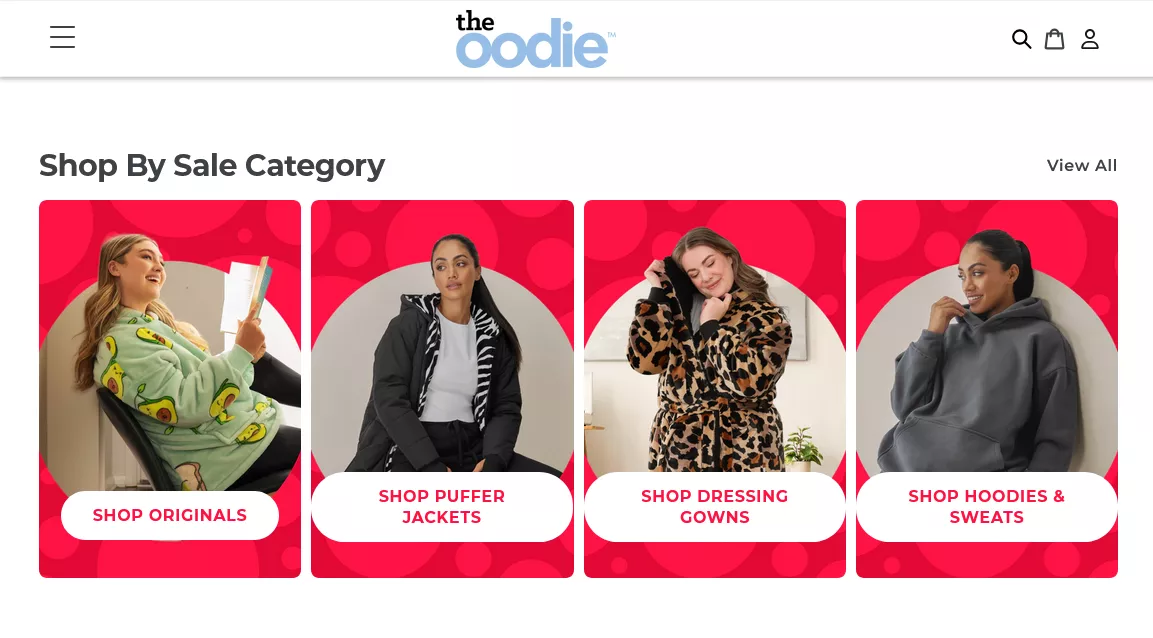
He poured those profits into building a brand of his own: The Oodie, a wearable-blanket hoodie. What began as a dropshipping experiment grew into one of Australia’s standout ecommerce brands, reportedly generating hundreds of millions in sales, and Fogarty now sits on the other side of the table as a Shark Tank Australia investor.
Dropshipping is a great way to test ideas. The real money is in turning a winner into a brand.
2. Julie New
Julie New, A Single Mum Who Started With $150
Julie launched Be Activewear with just $150 and a refusal to do what everyone else was doing. Instead of importing anonymous products from AliExpress, she went straight to established activewear labels and convinced them to let her dropship their gear, names like Ryderwear and Muscle Nation.
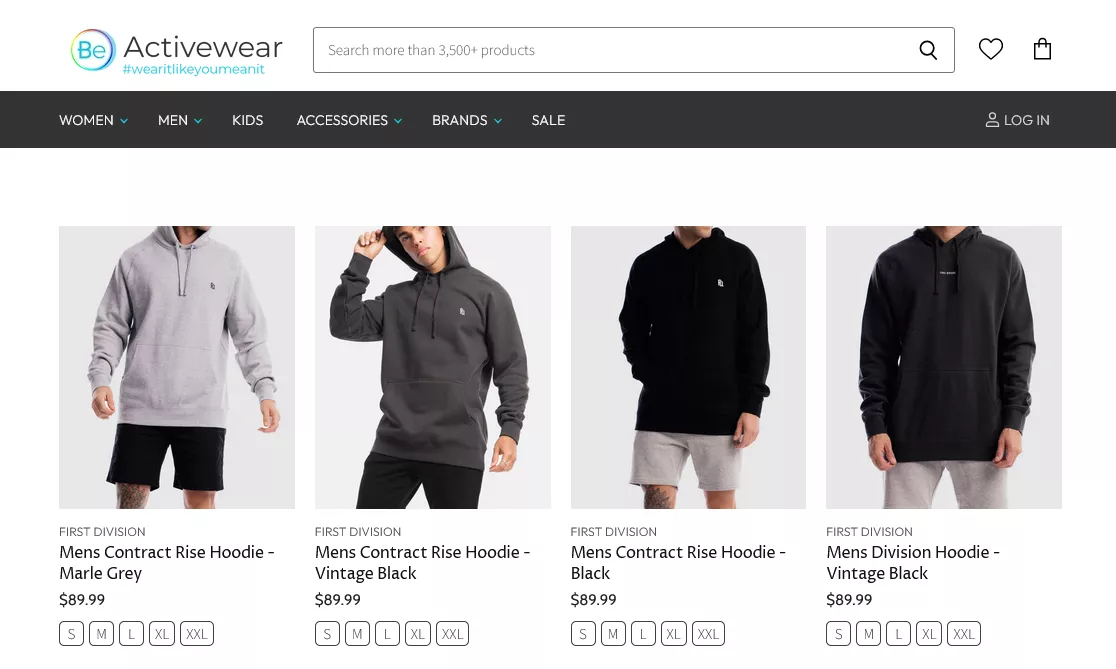
That one decision changed everything. Selling trusted brands in a tight niche, women’s sportswear, built instant credibility with shoppers, and her store has reportedly grown to over $1.5 million in sales a year. She later expanded into menswear, but the focus that built the business came first.
You don’t need mystery products. Sell brands people already trust, in a niche you own.
3. Andreas König & Alexander Pecka
Andreas König & Alexander Pecka, $10 Million a Year in the Pet Niche
This duo’s first stores were a mess. They tried jewelry (too saturated), then a general store (no traction), and burned through their budget, including a $2,000 ad flop, for barely ten sales. They had every reason to quit. Instead, they treated each failure as tuition.
They moved into the pet niche, betting that pet owners buy with their hearts, not just their wallets. With sharper Facebook ads, dependable suppliers, and a real brand behind the store, they scaled fast, reportedly to around $10 million a year, eventually building a full team to keep up.
Pick a niche people are emotional about, learn from every flop, and get genuinely good at ads.
How to Start Dropshipping (Quick Overview)
You don’t need to overthink the path, but you do need to take it seriously. At a high level, starting a dropshipping store comes down to five moves:
- Pick a niche you can actually compete in, specific enough to stand out, with real demand behind it.
- Find and vet reliable suppliers. Many sellers now diversify beyond a single overseas marketplace toward faster, more local options like Spocket, CJ Dropshipping, or Zendrop to improve shipping times.
- Choose a platform and build your store, keeping it clean, mobile-friendly, and trustworthy.
- Sort out the legal, tax, and payment basics before you start taking orders.
- Launch, market, and improve, starting with one channel and refining based on real data.
Budget-wise, a realistic figure for testing is around $500 to $2,000, with most stores taking a few weeks to set up properly.
The Bottom Line
Dropshipping in 2026 is a real business, not a hack. The model is alive and growing, but the economics shifted this year, and the sellers who win are the ones who pick a clear niche, work with dependable suppliers, source closer to their customers, and treat service as seriously as marketing.
If you go in expecting overnight riches, you’ll be disappointed. If you go in expecting to learn, test, and build something over a few months, the door is wide open.
Ready to put this into action? Start with our step-by-step guide on how to start a dropshipping store, and take the first real step instead of bookmarking this for “someday.”
So, what’s the first product you’d want to sell?
Frequently Asked Questions
Yes. Dropshipping is a legitimate retail model used by businesses worldwide. You're acting as the seller of record, so the usual rules apply: register your business when you start making consistent sales, collect sales tax where you're required to, and use a clear supplier agreement so responsibilities are spelled out. As long as you sell genuine products and follow your platform's policies, you're on solid ground.
No, but it has changed. The end of the U.S. duty-free allowance on low-value imports squeezed the old model of shipping ultra-cheap overseas goods to customers. Stores that source from domestic suppliers or use print-on-demand fulfilled in local warehouses have been far less affected. The model rewards sellers who build a brand and source smartly, and punishes those who relied only on rock-bottom overseas pricing.
You can technically start with very little, since there's no inventory to buy. A realistic budget for actually testing products and running ads is closer to $500-$2,000. Just as important: set aside money for taxes from your first sale, because a surprise tax bill sinks a lot of new sellers.
Yes. In the U.S., that typically means income tax on your profit, self-employment tax of around 15.3%, and sales tax in states where you have nexus. A common rule of thumb is to set aside 25-30% of profit for taxes, and to register for VAT if you sell into the EU. This is general guidance rather than tax advice, so confirm the specifics with an accountant for your situation.