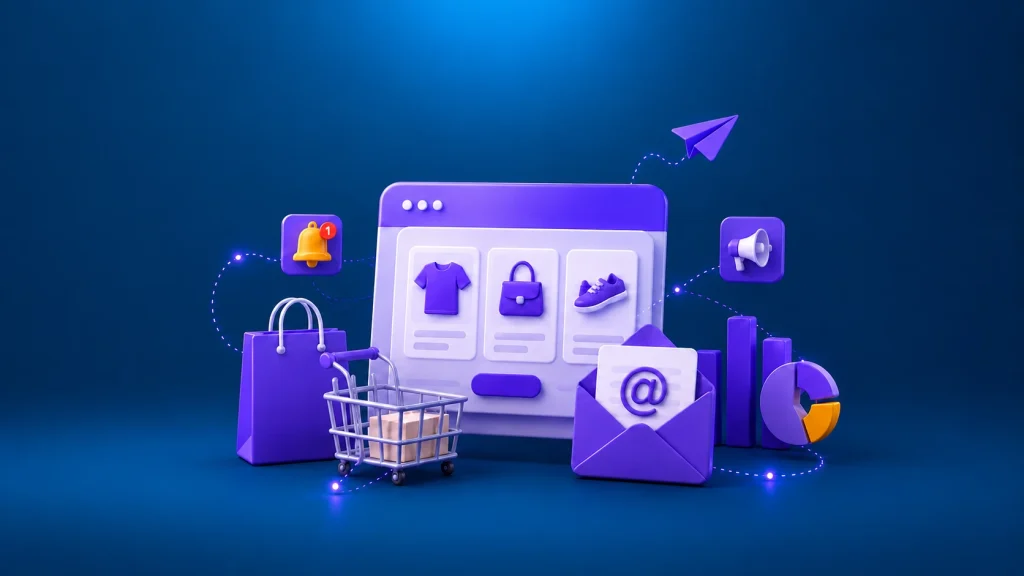
Ask any ecommerce store owner which marketing channel earns the most per dollar, and the honest answer is usually email. Not paid ads. Not social. Email. For every $1 spent, ecommerce brands see an average return of around $45, climbing to $72 for top US merchants. No other channel comes close to consistency.
So why do so many stores treat it as an afterthought? Most send the occasional promo blast and call it a strategy. Meanwhile, the real money sits in automated flows they never set up. In fact, mature stores attribute 20 to 30% of total revenue to email, and most of that comes from automation, not one-off campaigns.
This guide covers email marketing for ecommerce from the ground up: why it works, the core flows that quietly drive revenue, how to build a list worth emailing, and the segmentation and best practices that separate a $36 program from a $72 one. Whether you are starting an online store or reviving an email setup that has gone quiet, you will leave with a clear plan.
Why Email Marketing Works So Well for Ecommerce
Email marketing for ecommerce works for three reasons, and the first is simple math. The average return sits between $36 and $42 per dollar across industries, and for retail and ecommerce specifically, it climbs higher. Compare that to paid social, which typically returns $2 to $5 per dollar, and the gap speaks for itself.
The second reason is ownership. When you post to social, an algorithm decides who sees it. When you run ads, costs rise every year, and you only rent the audience.
Email is different. You own the list, and you decide who gets the message, when, and what it says, with nothing standing between you and the customer’s inbox.
The third reason is timing, and this is where automation changes everything.
Flows vs. Campaigns: The Automation Advantage
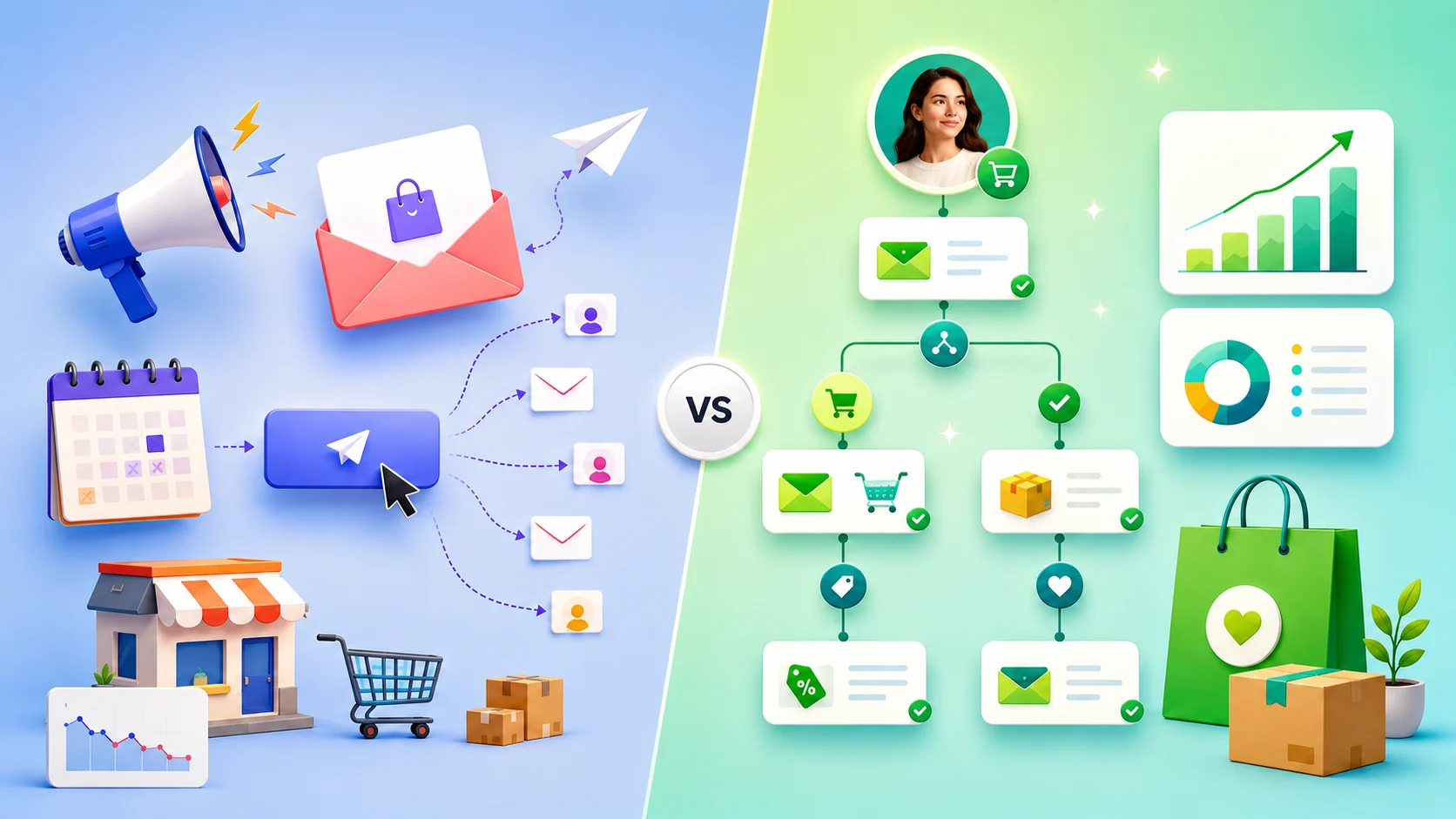
Here is the distinction most store owners miss.
- A campaign is a one-time send to your whole list, like a Black Friday announcement.
- A flow is an automated sequence triggered by behavior, like a welcome email when someone subscribes, or a reminder when they abandon a cart.
The performance gap between the two is striking. Omnisend found that automated emails make up just 2% of total sends but drive around 30% of email revenue, earning roughly 16 times more per send than scheduled campaigns. Klaviyo’s data tells the same story: in well-run stores, flows generate 30 to 50% of total email revenue while running on autopilot.
The lesson is not to abandon campaigns. You still need them for launches and promotions. However, if your email program is mostly broadcasts, your highest-leverage move is turning on the flows. That is where the money hides.
The Core Ecommerce Email Flows That Drive Revenue
If flows are where the revenue lives, which ones should you build? Not all of them at once. Start with the few that earn the most, get them stable, then expand. Here are the five core flows, in the order most stores should build them.
| Flow | Triggered when | Its job | Build priority |
| Welcome series | Someone subscribes | Turn a new subscriber into a first-time buyer | First |
| Abandoned cart | A shopper leaves items in the cart | Recover a sale that almost happened | First |
| Post-purchase | An order is placed | Build loyalty and earn repeat purchases | Second |
| Browse abandonment | A visitor views a product but does not add it | Re-engage interest before it fades | Second |
| Win-back | A customer goes inactive | Reactivate a lapsed buyer | Third |
1. Welcome Series
The welcome series is the most valuable flow in your account, and the reason is intent. It fires the moment someone subscribes, when interest in your brand is at its absolute peak. Welcome emails earn the highest open rate of any type, around 83% in ecommerce, and the average welcome flow generates roughly $2.65 per recipient.
A simple three-to-five email sequence works well: introduce the brand, share your bestsellers with social proof, then, if you offered a signup discount, remind subscribers it is about to expire. Keep the first email genuine. Readers can tell when a brand story is just a sales pitch in disguise.
Example
- Purpose: Introduce your brand and encourage a first purchase.
- Subject: Welcome! Here’s 15% Off Your First Order 👋
- Preview: Thanks for joining us-your exclusive discount is inside.
- Header: Welcome to the Family
- Subheader: We’re excited you’re here. Enjoy 15% off your first purchase.
- CTA: Shop Now
- Body: Thanks for signing up! We’re passionate about creating products you’ll love. As a thank-you for joining our community, here’s 15% off your first order. Browse our bestsellers and discover why thousands of customers choose us every day.
2. Abandoned Cart Recovery
After the welcome series, this is the flow with the highest revenue per recipient. Shoppers add items, get distracted, and leave, but the sale is rarely gone for good. Abandoned cart emails carry the highest click engagement of any automation, around 23%, and average $3.65 per recipient, climbing to $28.89 for top performers.
c0a9f4The winning pattern is a short sequence, not a single email: a reminder within an hour, a value-led follow-up the next day, then a final nudge after two or three days. Because it is a deep topic on its own, we cover the timing, copy, and setup in our full guide to abandoned cart recovery.
Example
- Purpose: Recover sales from customers who added items to their cart but didn’t check out.
- Subject: 🛒 You Left Something Behind
- Preview: Your cart is waiting-but not for long.
- Header: Complete Your Order
- Subheader: Your favorite items are still reserved for you.
- CTA: Return to Cart
- Body: Looks like you left a few great picks in your cart. They’re still available, but they may not stay in stock for long. Complete your purchase now and enjoy your new favorites before they’re gone.
3. Browse Abandonment
This one catches shoppers earlier in the journey. A browse abandonment email fires when someone views a product but never adds it to the cart.
Intent is lower than an abandoned cart, so keep the tone soft: show the product they looked at, suggest a few related items, and skip the hard sell. It tends to work best as a one-to-three email sequence spaced over a few days.
Example
- Purpose: Bring back visitors who viewed products but didn’t add anything to their cart.
- Subject: Still Thinking About It? 👀
- Preview: The products you viewed are waiting for you.
- Header: Take Another Look
- Subheader: Your recently viewed favorites are just a click away.
- CTA: View Products
- Body: We noticed you were checking out some of our products. If you’re still deciding, now’s the perfect time to take another look. Find the right fit and discover why customers love these bestsellers.
4. Post-Purchase and Order Follow-Up
The sale is not the finish line. It is the start of the relationship. A post-purchase flow goes beyond the order confirmation to reduce buyer’s remorse, set delivery expectations, and gently invite the next action: a review, a related product, or a reorder.
Done well, it lifts repeat purchase rate and customer lifetime value, which is where long-term profit actually lives. For a wider view of where this fits, see the ecommerce sales life cycle.
Example
- Purpose: Thank customers, provide order updates, and encourage repeat purchases.
- Subject: Your Order Is Confirmed! 🎉
- Preview: Here’s everything you need to know about your purchase.
- Header: Thanks for Your Order!
- Subheader: We’re getting everything ready for you.
- CTA: Track Your Order
- Body: Thanks for shopping with us! Your order is confirmed, and our team is preparing it for shipment. We’ll send tracking information as soon as it’s on the way. In the meantime, explore products that pair perfectly with your purchase.
5. Win-Back / Re-Engagement
Finally, some customers go quiet. A win-back flow targets buyers who have not purchased in a while with a friendly check-in, a reminder of what they are missing, or a time-limited offer. It will not reactivate everyone, and that is fine. Even a modest recovery rate from a list you already own beats paying to acquire a brand-new customer.
Once those five are running, growth flows like back-in-stock alerts and replenishment reminders (for consumable products) are worth adding next. Still, resist the urge to build everything at once. Foundation first, then expand. And set exclusion rules so your automations do not collide, because a subscriber who gets hit by three flows in one week is a subscriber who unsubscribes.
Example
- Purpose: Reconnect with inactive customers and encourage them to return.
- Subject: We Miss You! 💙
- Preview: Come back and enjoy a special offer just for you.
- Header: It’s Been a While
- Subheader: Here’s a little incentive to welcome you back.
- CTA: Come Back & Save
- Body: We haven’t seen you in a while, and we’d love to have you back. As a thank-you, here’s an exclusive offer just for you. Rediscover your favorites or explore what’s new—we can’t wait to welcome you again.
How to Build and Grow Your Email List
Flows and campaigns only work if you have people to send to. So before you optimize a single email, you need a list, and how you build it matters more than how big it gets.
Start with the signup opportunities already on your site. A pop-up with a clear offer (a discount, free shipping, or early access) converts browsing visitors into subscribers. So does a checkout opt-in, a footer signup, and a content upgrade on your blog. Here is a checklist to build and grow your email list:
- Add an email signup form to your homepage, blog, and footer.
- Offer a free incentive (discount, ebook, checklist, template, or guide) for subscribing.
- Keep your signup form short—only ask for the information you need.
- Use a clear call-to-action like “Get Free Updates” or “Claim Your Discount.”
- Promote your email list on social media and in your content.
- Send valuable emails consistently so subscribers stay engaged.
- Track signup and open rates, then improve what’s not working.
One rule, though, is non-negotiable. Never buy an email list. Purchased lists tank your deliverability, wreck your sender reputation, and in many regions break the law. A smaller list of people who actually opted in will always outperform a big list of strangers. Quality beats size every time.
Segmentation and Personalization: Where the Revenue Hides
Sending the same email to everyone is the most common mistake in ecommerce email marketing. It is also the most expensive one.
Why does it cost so much? Because relevance drives revenue. A first-time visitor, a loyal repeat buyer, and a customer who has not ordered in six months all need different messages. When you segment your list and tailor content to each group, the results compound. In fact, proper segmentation and personalization can lift email revenue by up to 760%. Even something as small as a personalized subject line raises opens by around 26%.
You do not need dozens of segments to start. A few high-impact ones do most of the work:
- New subscribers versus existing customers
- Past purchase behavior (category, value, frequency)
- Engagement level (recent openers versus dormant subscribers)
From there, AI tools make personalization easier than it used to be. They can draft product descriptions, write email copy, and tailor recommendations at scale- work that once needed a full marketing team.
Our overview of AI in ecommerce digs into where these tools help most.
Email Marketing Best Practices and Deliverability
Even the right flows fall flat if the emails land in spam or go unread. A few fundamentals keep your program healthy.
- Write subject lines that earn the open.
- Keep them short, specific, and curiosity-driven,
- Front-load the important words since most inboxes cut off after about 50 characters.
- And Design for mobile first.
More than half of ecommerce emails are opened on a phone, so a layout that breaks on a small screen is a layout that loses sales. Single column, large tap targets, short copy.
Why Open Rate Is No Longer the Metric to Chase
Here is something many guides still get wrong. Since Apple’s Mail Privacy Protection launched, open rate has become unreliable, because Apple pre-loads images and fires your tracking pixel whether or not a human ever sees the email. That inflates opens and makes the metric noisy.
So what should you track instead?
Click rate, placed order rate, and revenue per recipient. These tie directly to money and cannot be faked by a preloaded pixel. Still, open rate has one use: a sudden drop can signal a deliverability problem worth investigating. Beyond that, judge your emails by what they earn, not by who opened them.
Deliverability itself comes down to a few habits. Authenticate your domain (SPF, DKIM, DMARC), keep your list clean by removing dormant addresses, make unsubscribing easy, and send on a consistent schedule rather than in unpredictable bursts. Do those, and your emails reach the inbox instead of the spam folder.
How to Set Up Email Marketing for a WordPress Store
Setting up email marketing for a WordPress store involves two parts: transactional emails that are sent automatically and marketing emails that you intentionally send to promote products and build customer relationships.
Step 1: Set Up Transactional Emails
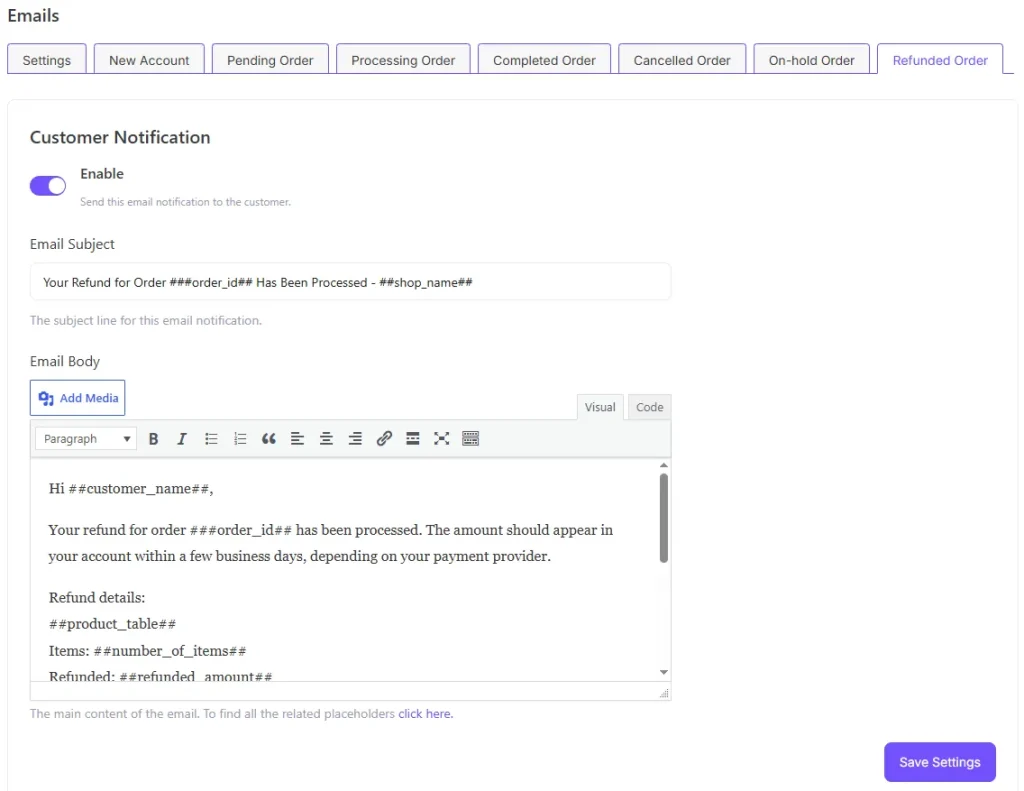
Start with the essential emails customers expect after interacting with your store. These may include:
- Order confirmations
- Payment confirmations
- Shipping and delivery updates
- Order status notifications
- Personalized follow-up emails
EasyCommerce handles these transactional emails directly within WordPress. Once configured, customers automatically receive important order information without requiring you to send each message manually.
Step 2: Enable Abandoned Cart Recovery
Next, set up abandoned cart emails for shoppers who add products to their carts but leave before completing checkout.
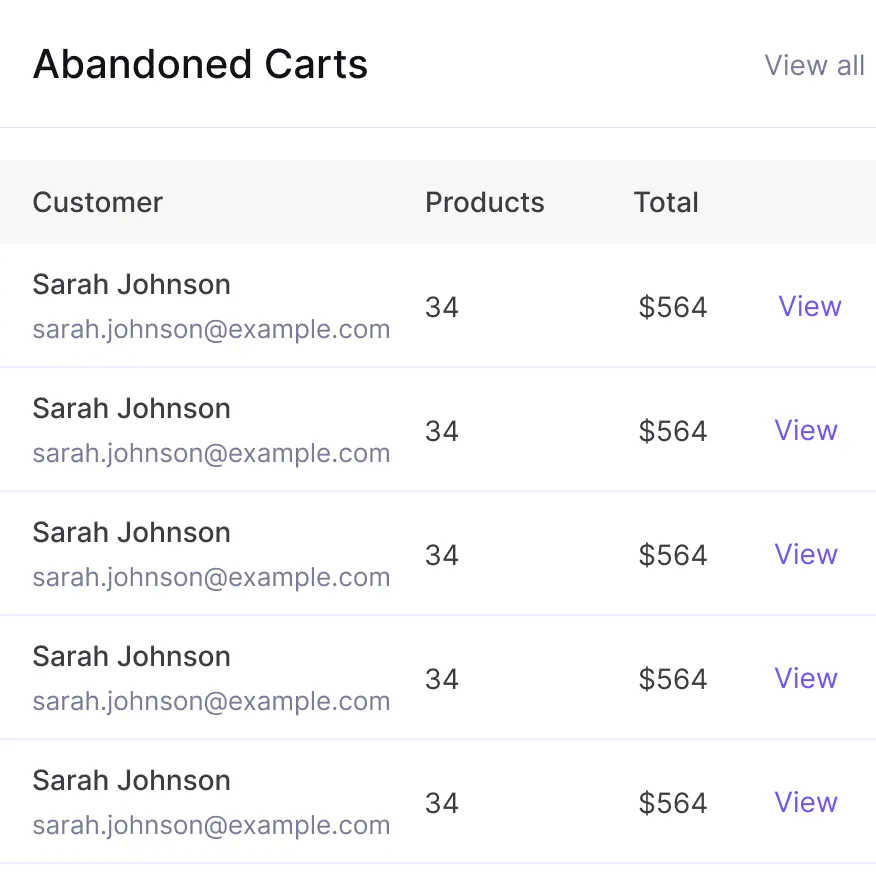
EasyCommerce includes built-in abandoned cart recovery. It can track abandoned checkouts and send personalized reminder emails encouraging customers to return and complete their purchases.
Before sending the email, review the reminder timing, email subject line, message, and recovery link before activating the campaign.
Step 3: Create the Email Copy
Write clear and persuasive copy for your transactional and abandoned cart emails.
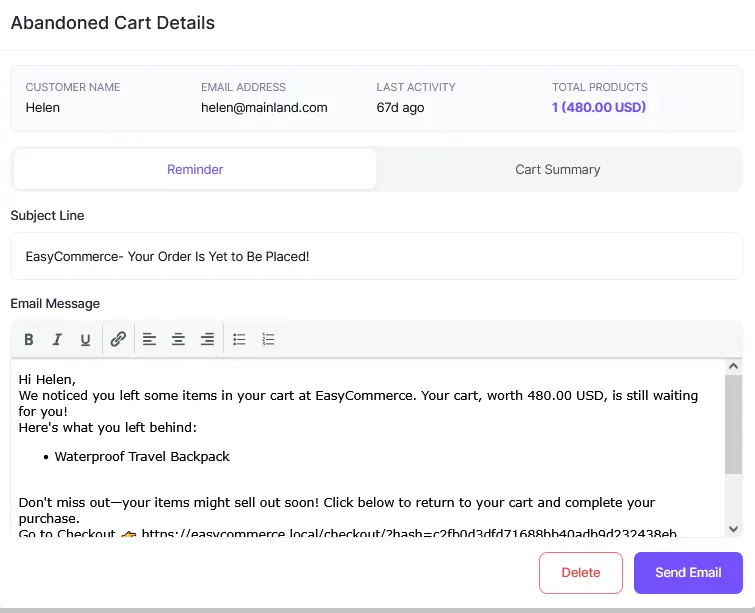
Your emails should explain what happened, what the customer should do next, and where they can get help. For abandoned cart messages, highlight the products left behind and include a clear button that returns the shopper to checkout.
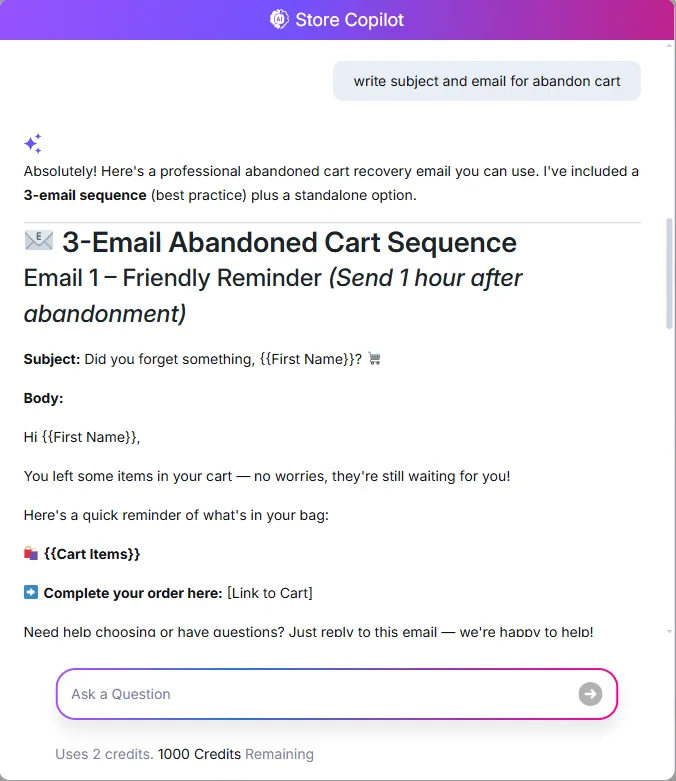
EasyCommerce’s Store Co-pilot can help generate subject lines and email content when you need a starting point.
Step 4: Connect a Dedicated Email Marketing Platform and SMTP
EasyCommerce is a WordPress ecommerce platform, not an all-in-one email marketing solution. It handles essential transactional emails and abandoned cart recovery, but you’ll need a dedicated email marketing tool for broader campaigns and automations, including:
- Welcome email sequences
- Customer segmentation
- Promotional newsletters
- Post-purchase follow-ups
- Advanced automated campaigns
- Custom one-time emails
Connect your store with a tool such as Klaviyo, Omnisend, or Mailchimp.
You should also configure an SMTP service to improve email deliverability and reduce the risk of store emails being delayed or marked as spam.
Step 5: Test Everything Before Launching
Place a test order and confirm that every email is delivered correctly.
- Check the email design
- Subject lines
- Customer details
- Product information
- Links
- Buttons, and mobile responsiveness.
You should also verify that marketing subscribers are being added to the correct lists or segments.
Step 6: Monitor and Improve Performance
Track email delivery rates, open rates, click-through rates, abandoned cart recoveries, and completed purchases.
Use this data to improve your subject lines, email copy, timing, offers, and audience segments. Even small adjustments can improve engagement and generate more sales over time.
For many small and growing WordPress stores, this two-layer setup works well. EasyCommerce keeps transactional and abandoned cart emails running inside the store, while a connected email marketing platform manages newsletters, customer segments, and advanced campaigns.
Conclusion
Email is not the flashiest channel, but it is the one that quietly outperforms the rest, and it rewards stores that treat it as a system instead of an occasional blast.
Three things to act on. First, build your flows before you obsess over campaigns, because the welcome, abandoned cart, and post-purchase sequences earn the most for the least ongoing effort. Second, segment your list so the right message reaches the right person. Third, judge your emails by revenue per recipient, not vanity opens.
If you sell on WordPress, you can start your ecommerce today with EasyCommerce, and let it handle your transactional and cart recovery emails, then connect a marketing platform as you grow. The inbox is still where some of your most profitable customer relationships happen.
Frequently Asked Questions
A good benchmark is around $36 to $45 for every $1 spent, and top US ecommerce programs reach $72 or more. If your return sits well below $36, the usual culprits are weak segmentation, missing automated flows, or an unengaged list. Focus on flows and relevance to push the number up.
Start with three: the welcome series, abandoned cart recovery, and post-purchase. These cover the highest-intent moments in the customer journey and deliver the most revenue per recipient. Once they are stable, add browse abandonment and a win-back flow.
There is no single right answer, but most stores do well with one to three campaign emails per week, on top of their automated flows. Watch your engagement and unsubscribe rates: if they dip, you are sending too often, or your content is not relevant enough. Consistency matters more than volume.
EasyCommerce includes automated transactional emails and built-in abandoned cart recovery inside WordPress. It does not run full marketing campaigns or segmentation on its own, so most stores pair it with a dedicated email platform for welcome flows, newsletters, and advanced automation.