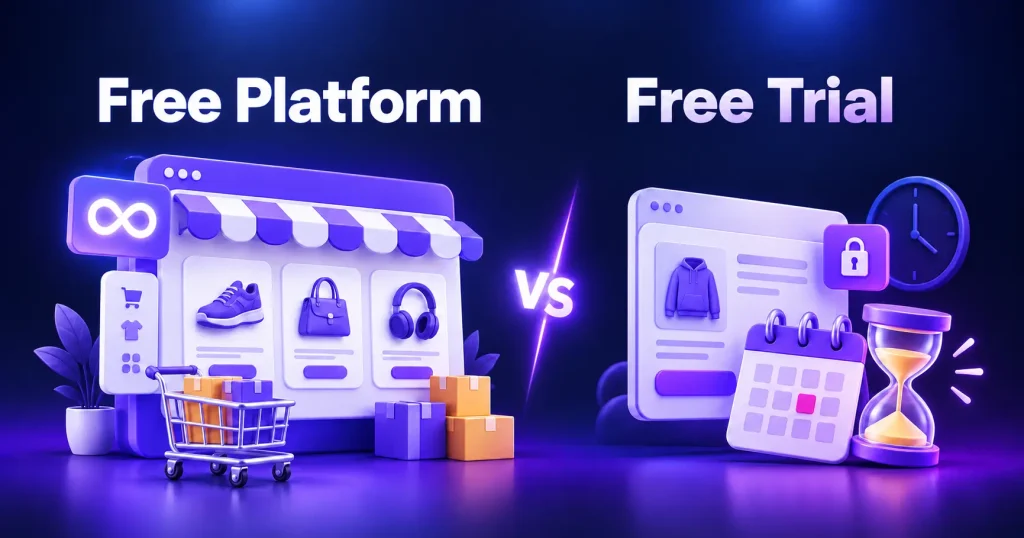
A trial gives you a few days or weeks on someone else’s hosted software, then bills you monthly and takes a cut of each sale. A free platform charges nothing for the software, but you still pay for hosting, a domain, and payment processing. Neither one is free. They are expensive in different places.
This guide puts real numbers on both routes, using published Shopify and BigCommerce pricing and current hosting ranges. You will see what a first year costs, where each option gets expensive, what switching later involves, and how to choose based on the sales you expect, not on which headline sounds better.
Prices checked on October 11, 2026. Platforms change pricing often, so confirm on the vendor page before you choose your platform.
Free Ecommerce Platform vs Free Trial: What’s the Difference?
A free trial gives you temporary access to a paid, hosted platform. A free ecommerce platform gives you software with no licence fee, usually self-hosted. The trial ends, and the billing starts. The free platform has no end date, but the hosting, domain, and processing bills start on day one.
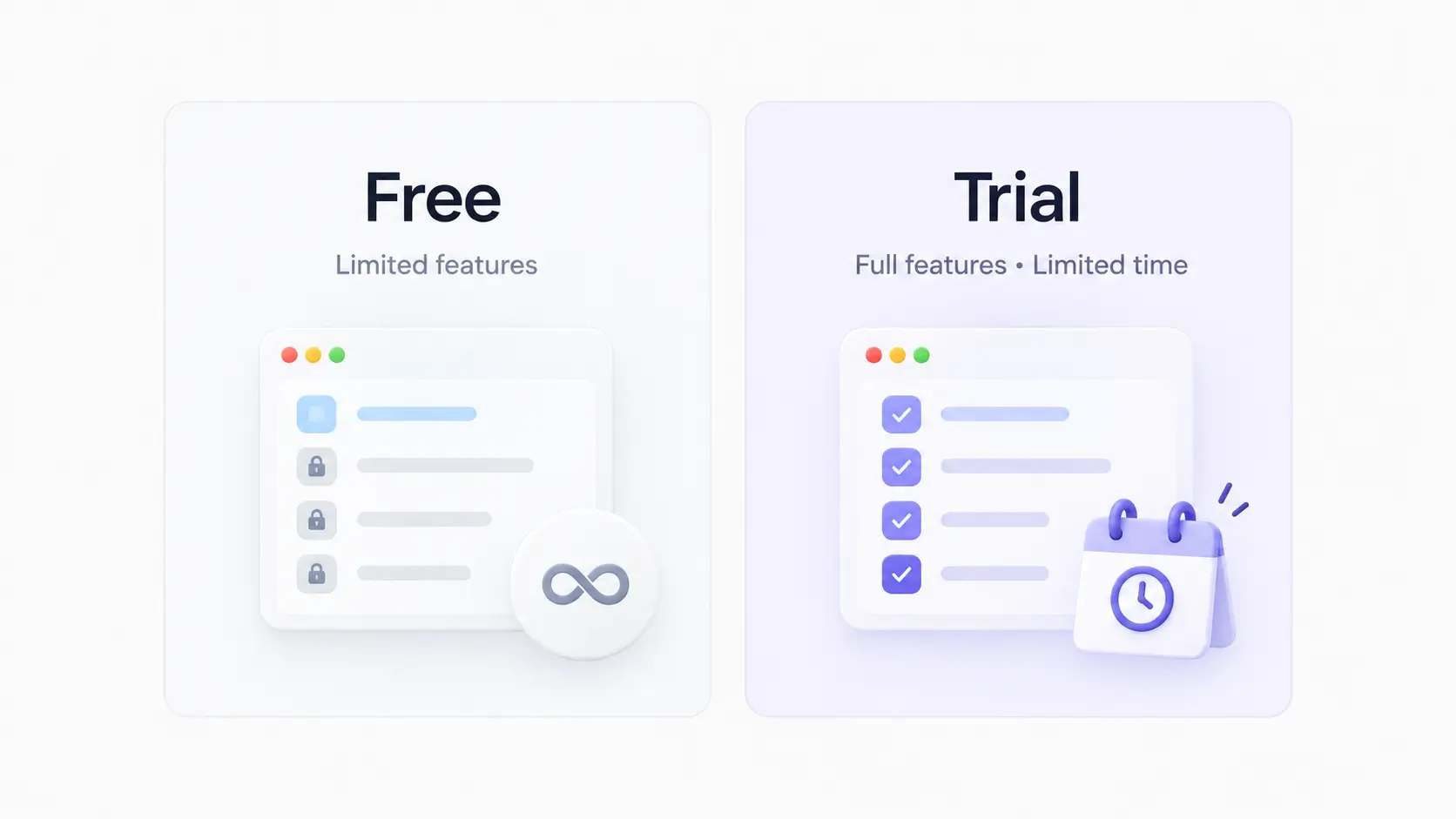
What a free trial really gives you
You get a hosted store with no server work. Shopify’s free trial runs 3 days with no credit card required, and BigCommerce’s trial runs 15 days, also without a card.
The catch is the clock. You build products, pages, and settings in their system, and when the trial ends, you either pay or start over elsewhere.
What a free ecommerce platform really gives you
You get software with no licence fee, and you choose where it runs. For example, EasyCommerce says its core plugin is free, with zero transaction fees, and it runs on WordPress.
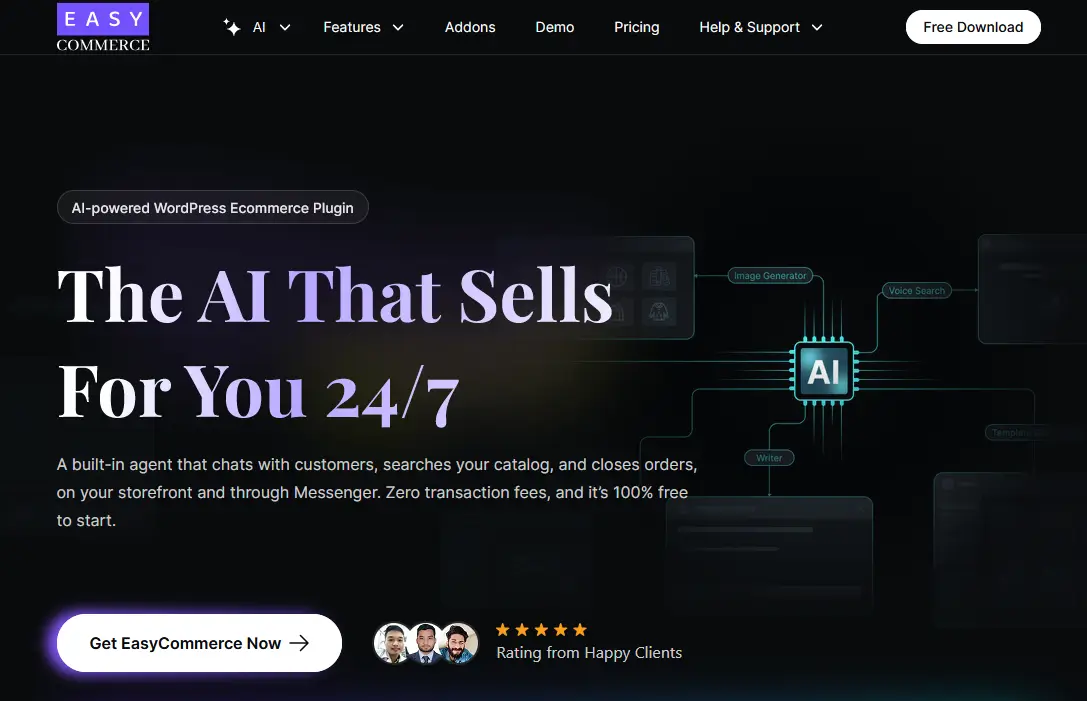
The catch here is responsibility. You handle hosting, updates, backups, and security, or you pay someone who does.
What Do Free Trials Cost After They End?
Once a trial ends, you pay the entry plan every month, plus fees on sales. The table below uses each vendor’s published prices, with the annual-billing rate shown beside the monthly one.
| Platform | Trial / Free option | Entry plan | Watch for |
| Shopify | 3-day free trial, then $1/month for 3 months | Basic: $39/month or $29/month billed annually | Card processing fees apply; additional transaction fees may apply when using third-party payment providers |
| BigCommerce | 15-day free trial | Standard/Core: from $39/month or around $29/month billed annually | Plan limits are tied to annual sales volume, which can trigger an automatic upgrade |
Sources: Shopify pricing, BigCommerce pricing.
Shopify: 3 days free, then $1 for three months
Shopify’s pricing page lists “3 days free, then $1/month for 3 months” before standard pricing applies. The Basic plan is $39 a month on monthly billing and $29 a month on annual billing.
So what does year one cost?
Three months at $1 plus nine months at $39 comes to $354. That is my own calculation from the published prices, and it excludes your domain, apps, and theme.
Annual billing changes the picture in year two. Twelve months at $29 is $348, while twelve months at $39 is $468. The $1 introductory offer hides that gap in year one, so look at the second year before you decide.
BigCommerce: 15 days, with a sales cap to plan around
BigCommerce gives you a longer trial and no card up front. The less obvious detail sits on the same pricing page: the Core plan covers up to $30K in trailing 12-month sales and then moves you to Growth, which lists at $105 a month.
That is a good problem to have. Just budget for it before it happens.
How we calculated these numbers?
Every figure in this guide follows the same assumptions, so you can rerun them with your own inputs:
- Shopify and BigCommerce year-one totals use monthly billing, with annual billing shown separately.
- The example store sells $10,000, as 200 orders at $50 each.
- Card fees use Shopify’s published Basic rates: 2.9% + 30¢ per order.
- Hosting and domain figures come from the published ranges cited in the next section.
- App, theme, and design costs are excluded on every route.
What Does a Free Ecommerce Platform Still Cost You?
A free platform costs you a hosting plan, a domain, and payment processing. The software is free, but the store is not. Here is where the money goes.
(i) Hosting and domain
Hosting is the biggest line, and the range is wide. WPBeginner’s WordPress cost guide, updated in September 2025, puts shared hosting at $35 to $150 a year and domains at $0 to $20 a year, often free in the first year with a hosting plan.
At the premium end, Kinsta’s WordPress cost guide, updated in June 2026, lists its managed plans from $35 a month and domains at $10 to $30 a year. Kinsta sells hosting, so read its figure as the high end of what a store might pay, not an average.
Put together, shared hosting plus a domain runs about $35 to $170 in year one. A $35 a month managed plan plus a domain runs about $430 to $450. Before payment processing, a free platform lands anywhere from roughly $35 to $450 in year one.
My view: cheap shared hosting is fine for testing a product idea. Once you take real payments, speed and uptime start to matter, and that is when the budget plan stops being a saving.
If you want the full picture beyond platform fees, our breakdown of the cost to start an online business covers it by business type.
Expert note: One of the most common cost mistakes I see store owners make is confusing a free trial with a genuinely free platform.
– Mustakim Ahmed, Ecommerce Expert
(ii) Transaction fees: where the real gap sits
Fees are where the two routes can split. On $10,000 in sales (200 orders at $50), Shopify’s Basic card rate of 2.9% + 30¢ comes to $350. Use a third-party payment provider, and Shopify adds a 2% charge on top, which is $200 more.
A free platform adds no platform cut. EasyCommerce, for instance, says it never takes a per-transaction fee. Your payment processor still charges its own fee on every route, so compare the extra layer, not the card rate itself.
| EasyCommerce | Free core plugin, no trial limit | Pro: $199/year (about $17/month) | No product limit and no EasyCommerce transaction fee. Hosting, domain, and payment gateway processing fees still apply |
What if you use Shopify’s own card processing?
Then the gap mostly disappears. Stripe’s pricing page lists 2.9% + 30¢ for a domestic card payment, which is the same headline rate as Shopify’s Basic card rate. On the same $10,000, you would pay about $350 either way.
In that case, the difference is the monthly plan against your hosting bill, not fees. The extra 2% is the part that adds up, and it only applies when you use a third-party gateway on Shopify.
(iii) Checkout friction costs more than either plan
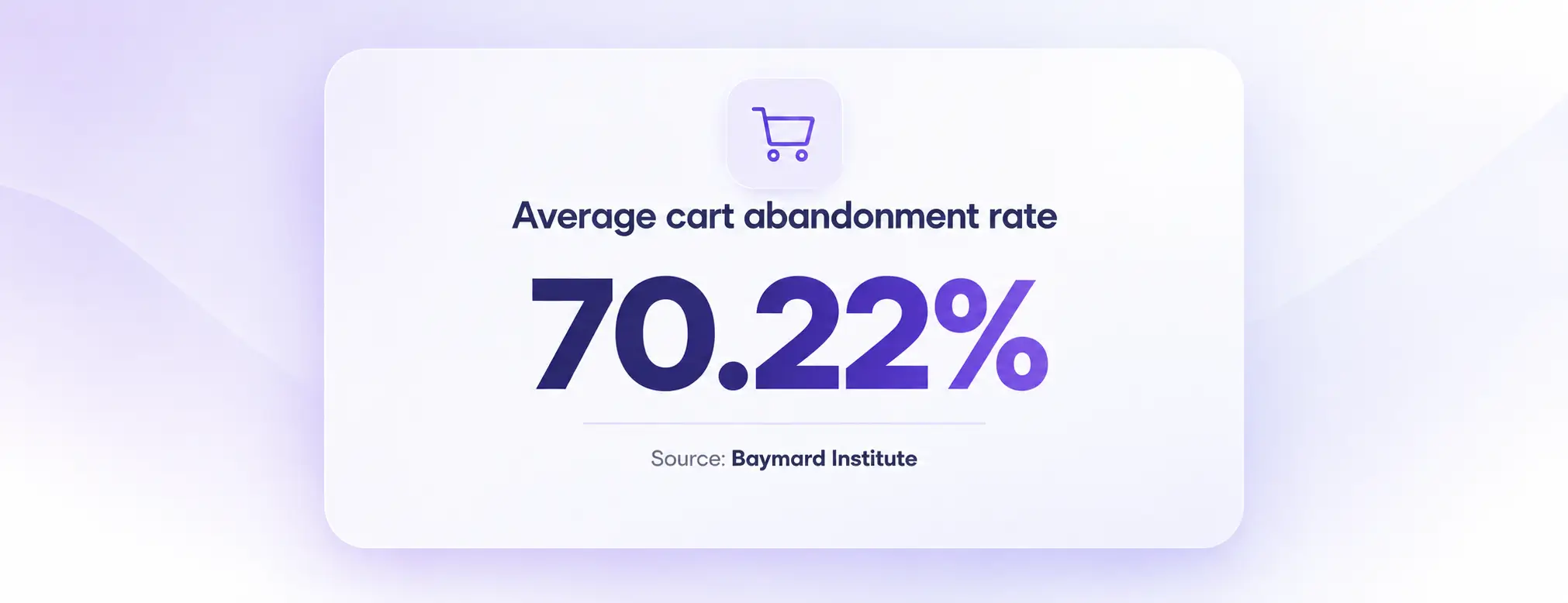
Does the platform price matter if shoppers leave at checkout? Often it matters less than the checkout itself. The Baymard Institute tracks an average cart abandonment rate of 70.22%, and in its March 2026 survey, 17% of US shoppers said a long or complicated checkout made them abandon an order.
Whichever route you pick, test the checkout on a phone before you launch. Our guide on what cart abandonment is and why it happens shows what to look for.
Free Ecommerce Platform or Free Trial: Which Fits Your Store?
Choose a trial if you are still testing if anyone wants what you sell. Choose a free platform if you already have a WordPress site, or expect steady sales and want to keep the fee layer thin. The right pick depends on your stage, not on the price tag.
Pick a free trial if…
- You have never sold online and want to see how an admin panel feels.
- You want zero server work and a store live in an afternoon.
- You are not sure the product will sell.
Use the trial to test, not to build. Three days is long enough to judge the admin, but not long enough to judge the business.
Pick a free platform if…
- You already run WordPress and want the store on the same site.
- You sell digital products or other items where a platform cut hurts.
- You expect steady volume and prefer to own your data.
A third option: a low-cost hosted plan
Not every hosted option is a trial. Ecwid’s pricing page shows no free plan, but it does list a Starter plan at $5 a month for up to 10 products, with no transaction fees on any plan.
If you sell a handful of products and want zero server work, a plan like that can cost less than both routes above. The product limit is the catch, so check it against your catalog.
The judgment call
If you plan to use a third-party gateway on Shopify, the extra 2% equals a $39 plan once you sell about $2,000 a month through that gateway (2% of $2,000 is $40). On annual billing, where Basic is $29, that point drops to about $1,450 a month. Below those levels, the platform fee is roughly a wash against hosting. Above them, the free route starts to pull ahead.
That is my calculation, and it has limits. It ignores setup time, and if you use Shopify’s own card processing, the 2% does not apply, so the gap narrows. Treat it as a starting point and rerun it with your numbers.
What Happens If You Switch Later?
Switching is possible on every route, but it costs more time than money. The part people underestimate is rebuilding what a platform stores outside your product list: page designs, redirects, discount codes, and email flows.
Products and customers
As far as I know, most platforms let you export products and customers as a CSV file, and most let you import one. Formats differ between platforms, so expect to map columns by hand. Test with 10 products before you move the full catalog.
What does not move easily?
Order history, page URLs, and theme design tend to need extra work. Old product URLs matter most, because a missing redirect sends shoppers and search traffic to a 404. Make a list of your top pages before you switch and set up redirects for each.
How to lower the risk?
- Keep your product data in a spreadsheet from day one, so you are never locked to one admin screen.
- Use your own domain from the start, so your URLs survive a platform change.
- Do not build a large store inside a trial. Build the minimum, then commit.
Where EasyCommerce Fits
EasyCommerce is a WordPress ecommerce plugin with a free core. It includes product management, checkout, coupons, reviews, order management, and abandoned cart recovery, and it supports Stripe, PayPal, Mollie, Square, Braintree, and Cash on Delivery.
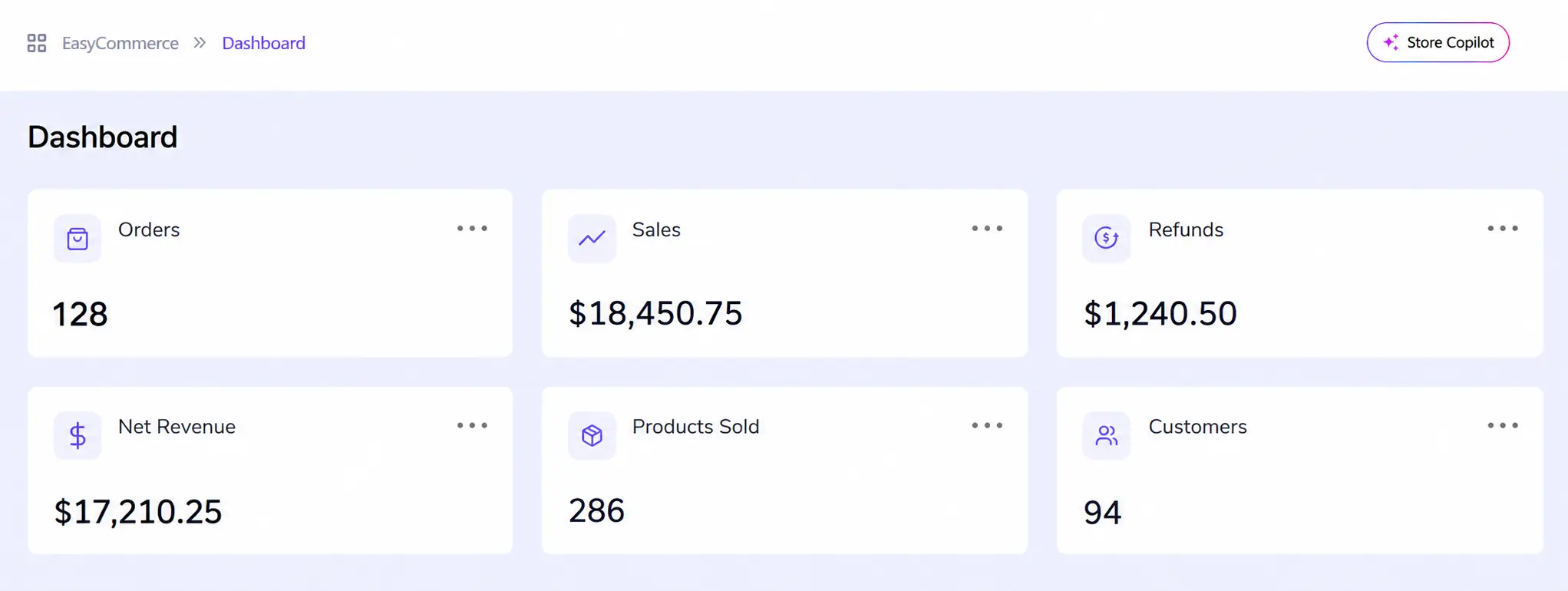
Its AI features run on credits. This free ecommerce plugin includes 100 monthly AI credits (200 in the first month), and the shopping agent and store copilot cost 1 credit per conversation turn. Pro plans start at $199 a year for one store, and some regional gateways and Pro add-ons are paid.
It is not for everyone. It needs WordPress, and you manage your own hosting. If you want a fully hosted store with nothing to maintain, a trial-based platform fits better. If you want to try the free route, our guide on how to build an ecommerce store in WordPress walks through setup.
Conclusion
A trial is a countdown to a bill, and a free platform is a different bill in different places. Three things to remember:
- Free means no licence fee, not no cost. Year one on a free platform lands between roughly $35 and $450 in hosting and domain.
- The gap is in fees. Shopify adds 2% on third-party gateways, and a free platform adds no platform cut.
- Match the route to your stage: trial to test, free platform to scale on WordPress.
If you are thinking about starting or already on WordPress, you can try the free EasyCommerce plugin and run the numbers yourself. Browse more guides in our ecommerce business section.
Frequently Asked Questions
The software is free, but running a store is not. You still pay for hosting, a domain, and payment processing fees. Based on the ranges above, year one tends to land between about $35 and $450 before processing fees, depending on your hosting plan.
Usually, yes. As far as I know, most platforms let you export products and customers as a CSV file, but order history and page URLs often need extra work. The section above on switching later covers what to check before you move.
Yes, EasyCommerce offers a free version that you can use to build and manage your online store without a monthly subscription. You can start selling without paying for a premium plan. If you need additional features, you can explore EasyCommerce Pro.