Amazon’s shopping assistant can watch a product’s price and buy when it reaches your target. Shoppers aren’t just asking AI what to buy. They’re asking it to act.
AI shopping agents make that possible, but not every chatbot qualifies. Some recommend products; others build carts and complete purchases.
The shift is showing up in sales. According to Adobe’s July 2026 data, AI-referred visits to US retail sites converted 60% better than other traffic, the 11th consecutive month they outperformed.
This guide explains what AI shopping agents are, how they work, which tools people use, and what shoppers and merchants think of them. It also covers what they mean for your online store, especially on WordPress.
TL;DR
- AI shopping agents are AI tools that search, compare, and buy products on a shopper’s behalf, usually with the shopper approving the final payment.
- They work in four steps: understand the goal, read product data, compare options, then act.
- Most shoppers want help deciding but still want the last word on paying.
- Well-known agents include ChatGPT, Google AI Mode, Perplexity, Amazon’s Alexa for Shopping, and Walmart’s Sparky.
- WordPress store owners can run their own agent with EasyCommerce, a free plugin with a built-in AI Shopping Agent.
What Are AI Shopping Agents?
AI shopping agents are AI systems that shop on a person’s behalf. Given a goal like “running shoes under $150 that arrive by Friday,” they search products, compare prices and specs, and can add items to a cart or complete checkout. In most cases, as Stripe explains, the agent does the legwork and then returns to the shopper to approve the final payment.
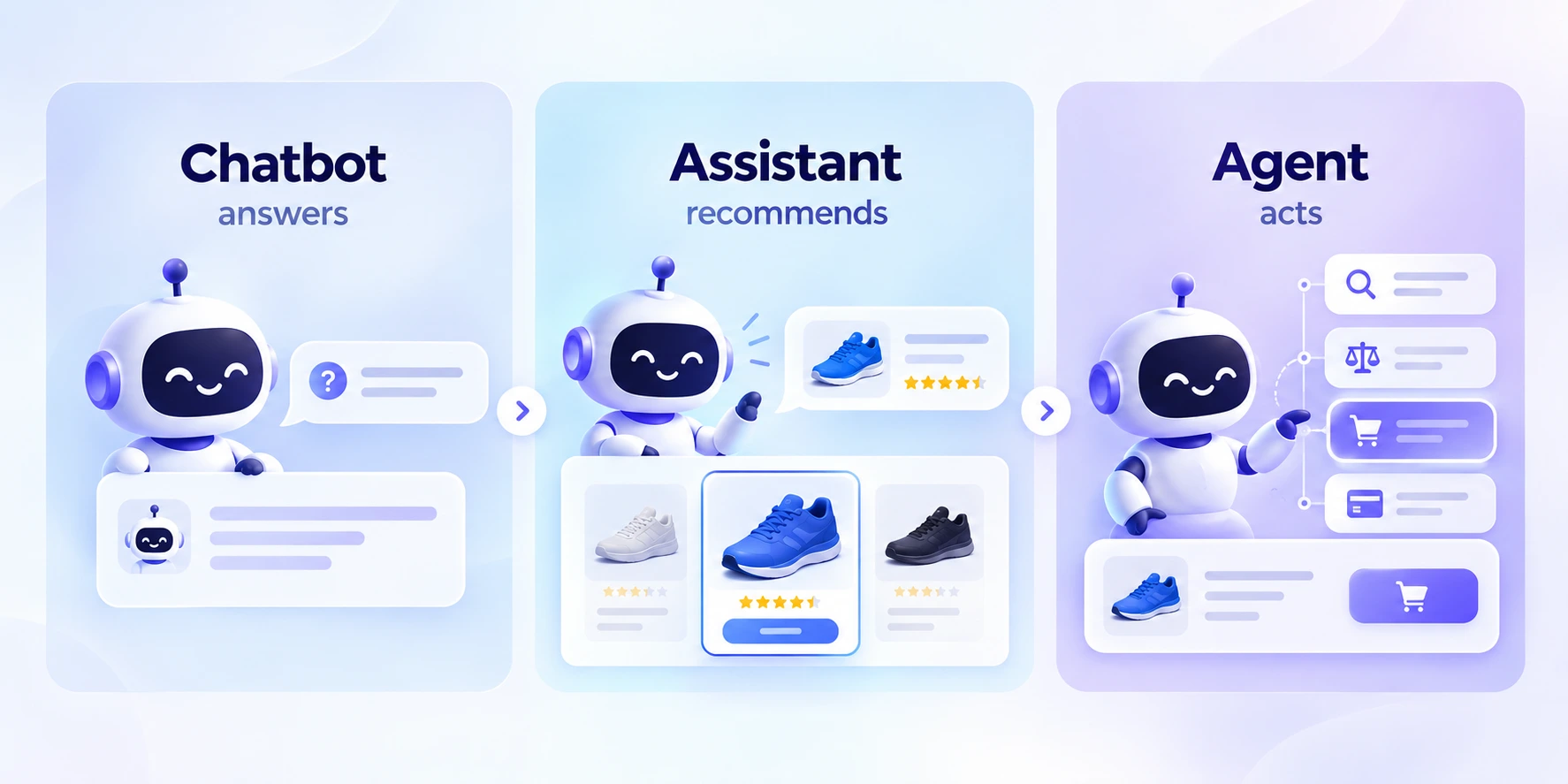
That ability to act is what separates an agent from a chatbot. A chatbot answers questions. An agent does things. AlixPartners describes the shift as agents moving beyond conversation into tasks like filling a cart automatically and completing the purchase. For the wider picture of how this is changing online retail, our guide to agentic commerce goes deeper.
The Three Traits of a Real Shopping Agent
Plenty of tools call themselves agents. A real one has all three of these traits.
- It works toward a goal. You describe the outcome you want, not the steps to get there.
- It uses tools. Search, stock checks, price comparisons, coupon codes, carts. IBM notes that shopping agents can move through ecommerce sites, compare prices across retailers, apply coupons, and pay using payment methods the shopper approved in advance.
- It acts within limits you set. Budget, preferred brands, delivery date, and whether it can pay without asking first.
If a tool only recommends products and stops there, it’s an AI shopping assistant. Useful, but not an agent.
How Do AI Shopping Agents Work?
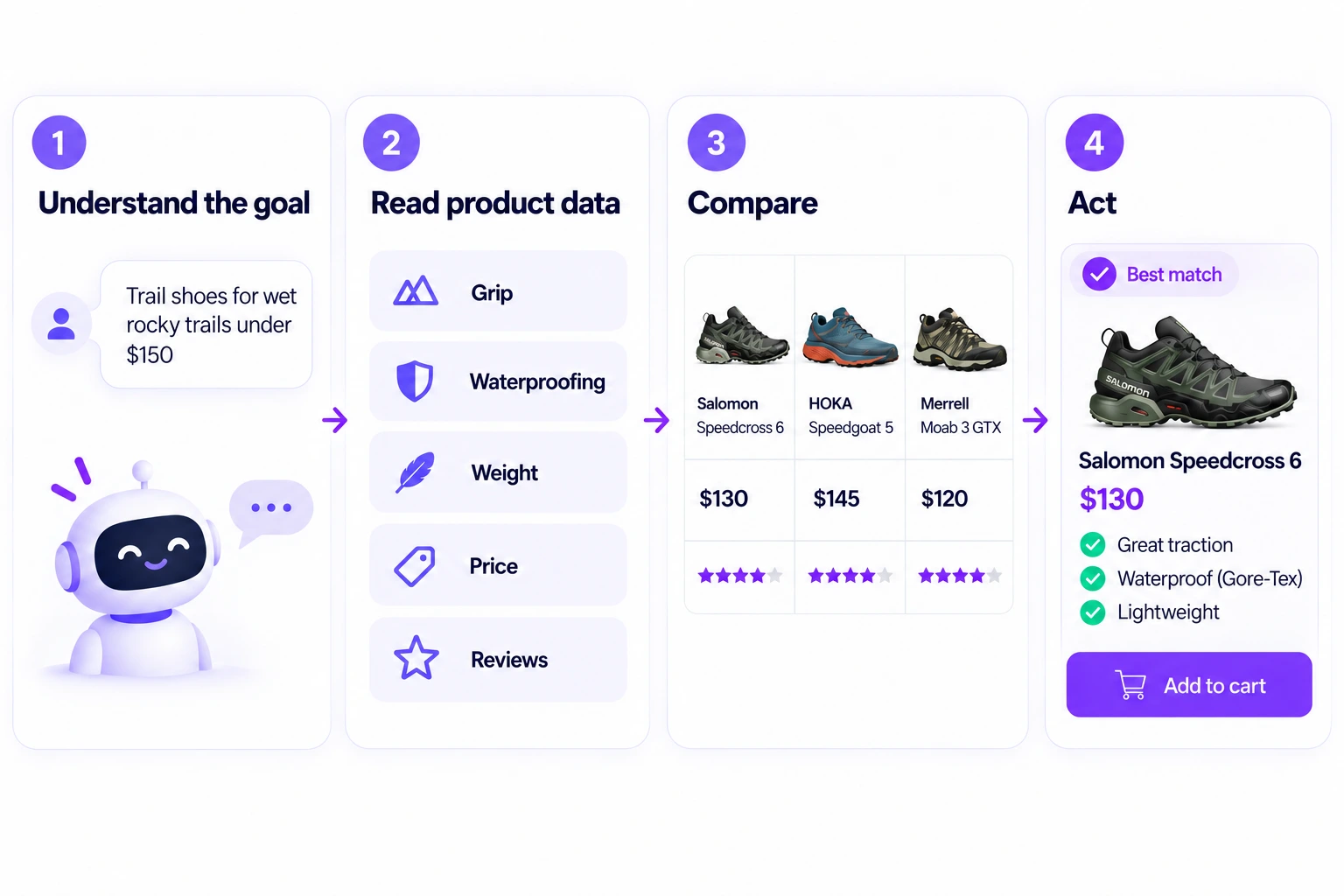
AI shopping agents work in four stages. They interpret the shopper’s goal, gather product data and reviews, compare options against the shopper’s criteria, and then take action, which can range from sharing a link to completing checkout. The shopper can step in at any stage, and most agents ask for confirmation before any money moves.
Step 1: Understanding the Shopper’s Goal
Everything starts with a request in plain language. Take this one: “Waterproof trail shoes, men’s size 10, under $150, delivered by Friday.”
A search engine sees keywords. An agent sees four constraints (use, size, budget, and deadline) and turns each one into a filter.
Step 2: Reading Product Data and Reviews
Next, the agent collects information: product listings, prices, stock status, delivery estimates, and what other people say about the product. When TechRadar tested ChatGPT’s shopping feature, the results included a summary of opinions drawn from Reddit, Amazon reviews, and tech review sites.
That has a real consequence for sellers. Your reputation on forums and review sites now feeds straight into the recommendation, not just your own product page.
Step 3: Comparing and Shortlisting
With the data in hand, the agent ranks the options. Price, specifications, delivery time, and availability do most of the work.
Your hero banner and lifestyle photos barely count here. The agent is reading data, not admiring design. The shopper usually gets a short list with a reason attached to each pick.
Step 4: Taking Action (and How Much Control the Shopper Keeps)
The final step is where agents differ the most. Some stop at a link, while others finish the purchase. It helps to think of it in three levels.
| Level | What the Agent Does | What the Shopper Still Controls |
| Recommends | Suggests products and links to the store | Everything: cart, checkout, payment |
| Assists checkout | Fills the cart and prepares the order | The final “buy” tap |
| Buys on its own | Completes the purchase once set conditions are met | The rules: product, budget, price trigger |
Most agents today sit at the first two levels. The third exists, but only in narrow forms, such as buying an item once it drops to a target price.
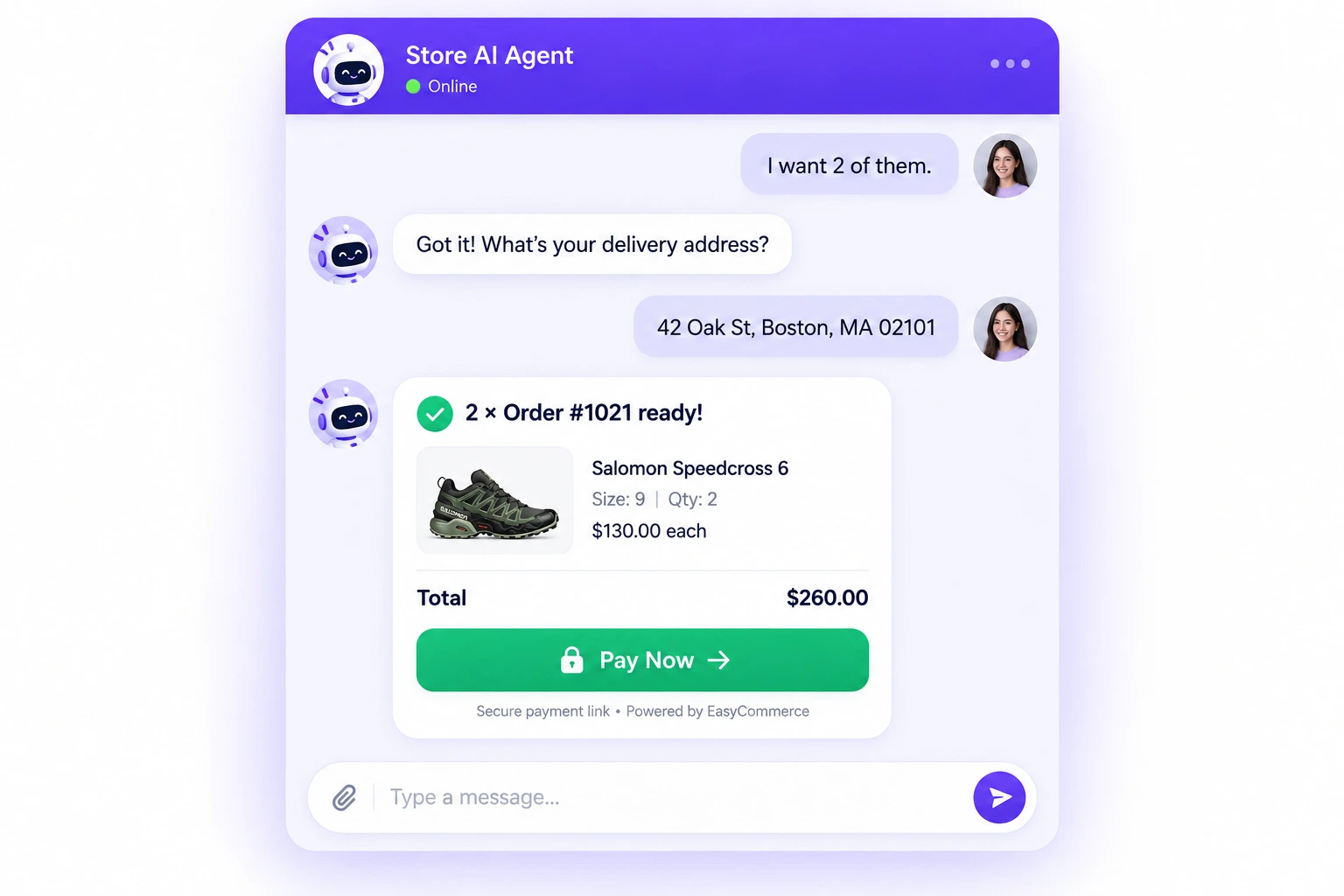
Store-owned agents usually work at the second level. On a WordPress store running EasyCommerce, for example, the AI Shopping Agent builds the order inside the chat and then sends the shopper a secure payment link, so the shopper always makes the final tap.
Behind the scenes, new open standards let agents talk to store systems and payment providers. Our agentic commerce guide explains the main protocols if you want the technical side.
What Shoppers and Store Owners Actually Say
Adoption is climbing, but the people using these tools are more cautious than the headlines suggest. Both sides of the counter have concerns worth hearing.
Shoppers Want a Co-Pilot, Not an Autopilot
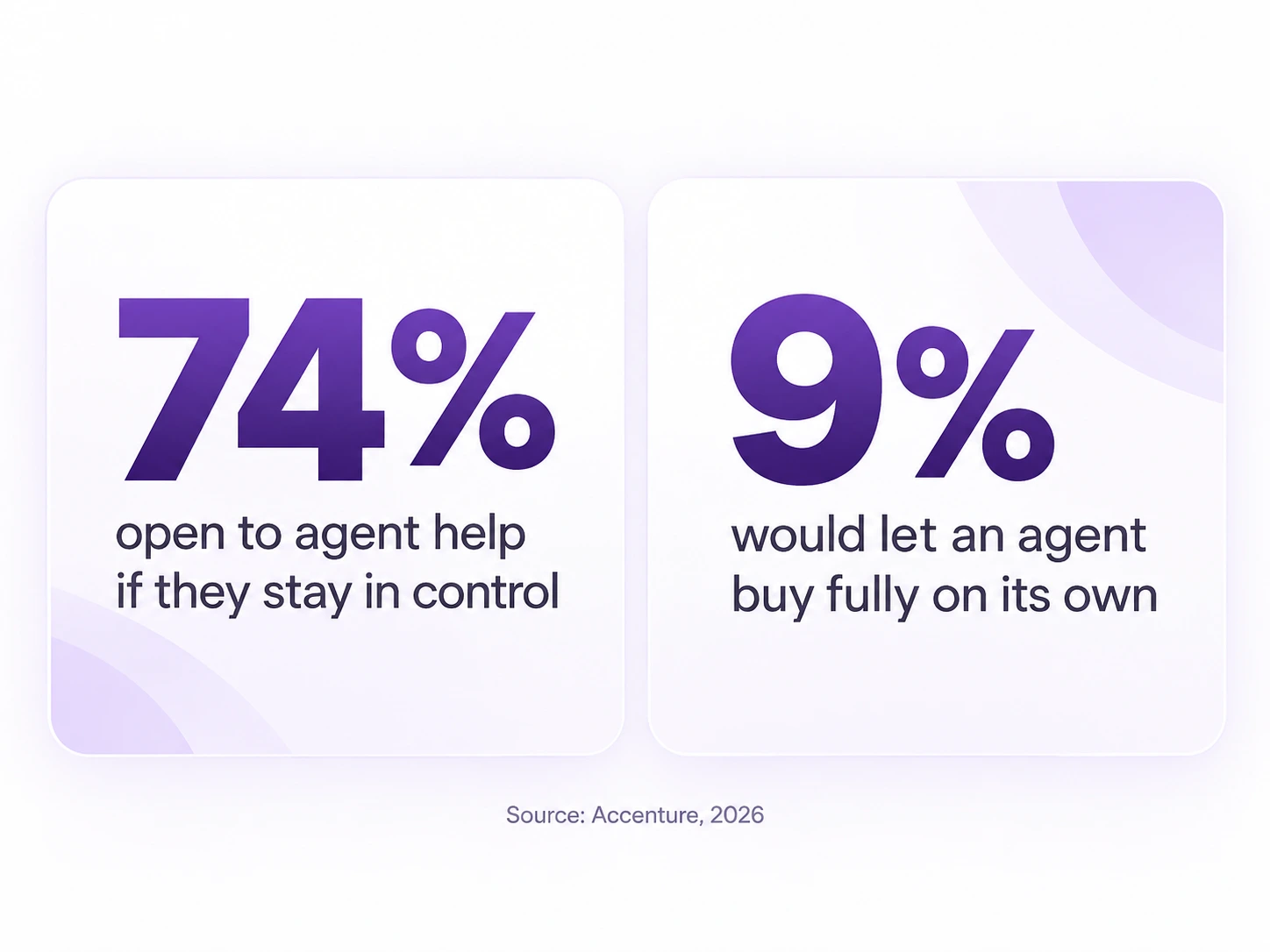
Accenture surveyed 25,590 consumers in 16 countries. Most (74%) were open to an agent handling tasks like reordering or resolving complaints as long as they stayed fully in control, but only 9% would let an agent shop fully on its own and complete purchases.
Bain & Company found the same hesitation. Half of consumers aren’t comfortable letting AI handle a transaction from start to finish on its own. The pattern holds across markets: people want help deciding, and they want the last word on paying.
What Real Users and Merchants Report
On the shopper side, a Slickdeals thread about Amazon’s Auto Buy feature captures the mixed feelings well. Some users liked the idea, while others worried about how much control Amazon keeps, with one arguing the feature should come from an independent service that doesn’t share data with Amazon.
Merchants have sharper complaints. CNBC reported that small businesses took to Reddit and Instagram after Amazon’s Buy for Me agent, which purchases from other retailers’ websites on a shopper’s behalf, listed products they never sold or had out of stock. A Virginia stationery shop started receiving orders for a stress ball it doesn’t carry.
That second story is worth pausing on. The shop did nothing wrong. An outside agent misread what the store sold, and the store was left to clean up the mess.
Where AI Shopping Agents Still Fall Short
Three weak spots keep coming up.
- Outdated data. Agents working from copied pages can get prices or stock wrong, as the Buy for Me complaints show.
- Checkout headaches. Tax, inventory syncing, and fraud handling are hard to manage inside someone else’s chat window, which is part of why OpenAI paused its in-chat checkout.
- Trust. Most shoppers still want to approve every payment.
My take: you can’t control how an outside agent reads your store. You can make your product data clear, and you can run your own agent that answers straight from your catalog. The first protects you. The second is where the sale actually happens.
AI Shopping Agents You Can Use Today
AI shopping agents fall into three groups, depending on who the agent works for. Bain’s research uses a similar split, and found shoppers trust a retailer’s own agent about three times more than a third-party agent to complete a purchase. Here’s what is live as of September 2026.
| Agent | Who Runs It | What It Can Do | Status (Sept 2026) |
| ChatGPT shopping | OpenAI | Researches and compares products, links to merchant sites | Live; in-chat checkout paused in March 2026 |
| Google AI Mode and Gemini | Product research, price tracking, agentic checkout | Rolling out with eligible US merchants | |
| Perplexity Instant Buy | Perplexity with PayPal | Research and checkout inside the chat | Live in the US with select merchants |
| Alexa for Shopping (formerly Rufus) | Amazon | Compares products, fills carts, auto-buys at a set price | Live in the US |
| Buy for Me | Amazon | Buys from other retailers’ sites inside the Amazon app | Live in the US |
| Sparky | Walmart | Recommends products, plans purchases, reorders repeat items | Live |
Third-Party Agents
These are the agents shoppers bring with them, such as ChatGPT, Gemini, Perplexity, and Claude. They aren’t tied to any one store, which makes them handy for comparing options across the web.
Google began rolling out agentic checkout in Search, including AI Mode, with eligible US merchants such as Wayfair, Chewy, and Quince. Perplexity’s Instant Buy uses PayPal to complete purchases inside the chat, while the retailer stays the merchant of record.
ChatGPT took a different path. OpenAI paused its Instant Checkout feature in March 2026 after roughly five months, because shoppers used ChatGPT for research but rarely bought inside the chat. Forbes covered the retreat and what it signals.
Marketplace Agents
The biggest retailers built their own agents to keep shoppers inside their walls.
Amazon renamed Rufus to Alexa for Shopping on May 13, 2026. Amazon’s Buy for Me goes a step further. According to TechCrunch, the agent visits an outside store’s website, selects the product, and enters the shopper’s name, address, and payment details to buy it.
Walmart’s version is Sparky. Walmart reported that shoppers who use Sparky spend about 35% more per order than those who don’t, and the agent can now reorder items shoppers buy regularly.
Store-Owned Agents
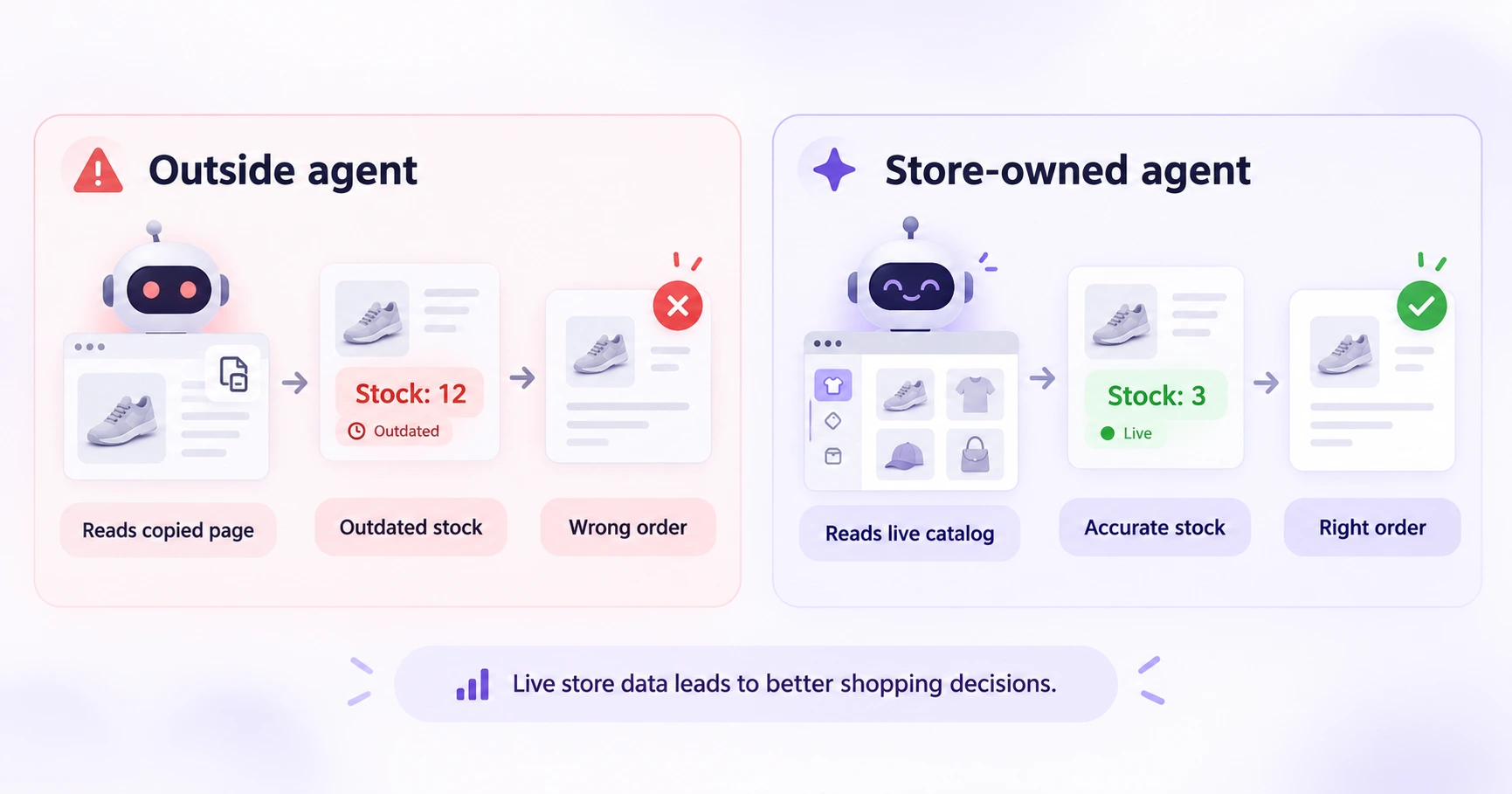
Here’s the gap. Amazon and Walmart have their own agents, but most independent stores don’t. Their only exposure to AI shopping comes through agents they can’t control.
A store-owned agent lives on your own site, answers from your own catalog, and closes the sale through your own checkout. For WordPress store owners, there’s one more benefit: the products, orders, and customer data stay in your own WordPress database instead of on a marketplace’s servers. Given how much more shoppers trust a retailer’s own agent, that isn’t a small advantage, and it’s the gap EasyCommerce was built to close.
What AI Shopping Agents Mean for WordPress Store Owners
So what should a store owner do with all this? Shoppers arriving from AI tools are already close to buying, and they trust a store’s own agent more than an outside one. That makes a storefront agent one of the most practical AI moves a small store can make.
Most WordPress stores have never had that option without custom development. EasyCommerce, a free WordPress ecommerce plugin, builds it in: you install the plugin, turn on the agent, and it runs inside your existing WordPress site.
Put Your Own AI Shopping Agent on Your Storefront
The EasyCommerce AI Shopping Agent is a chat widget that runs on every page of your store and handles a full sale through conversation, using 23 built-in tools. It can:
- Search your catalog by keyword, color, size, price range, or category, in plain language
- Check stock and show every product variant
- Validate coupons, calculate shipping, and estimate the order total with tax
- Create the order and send a secure payment link that leads to your standard checkout
- Handle follow-ups like order status, tracking, and address changes
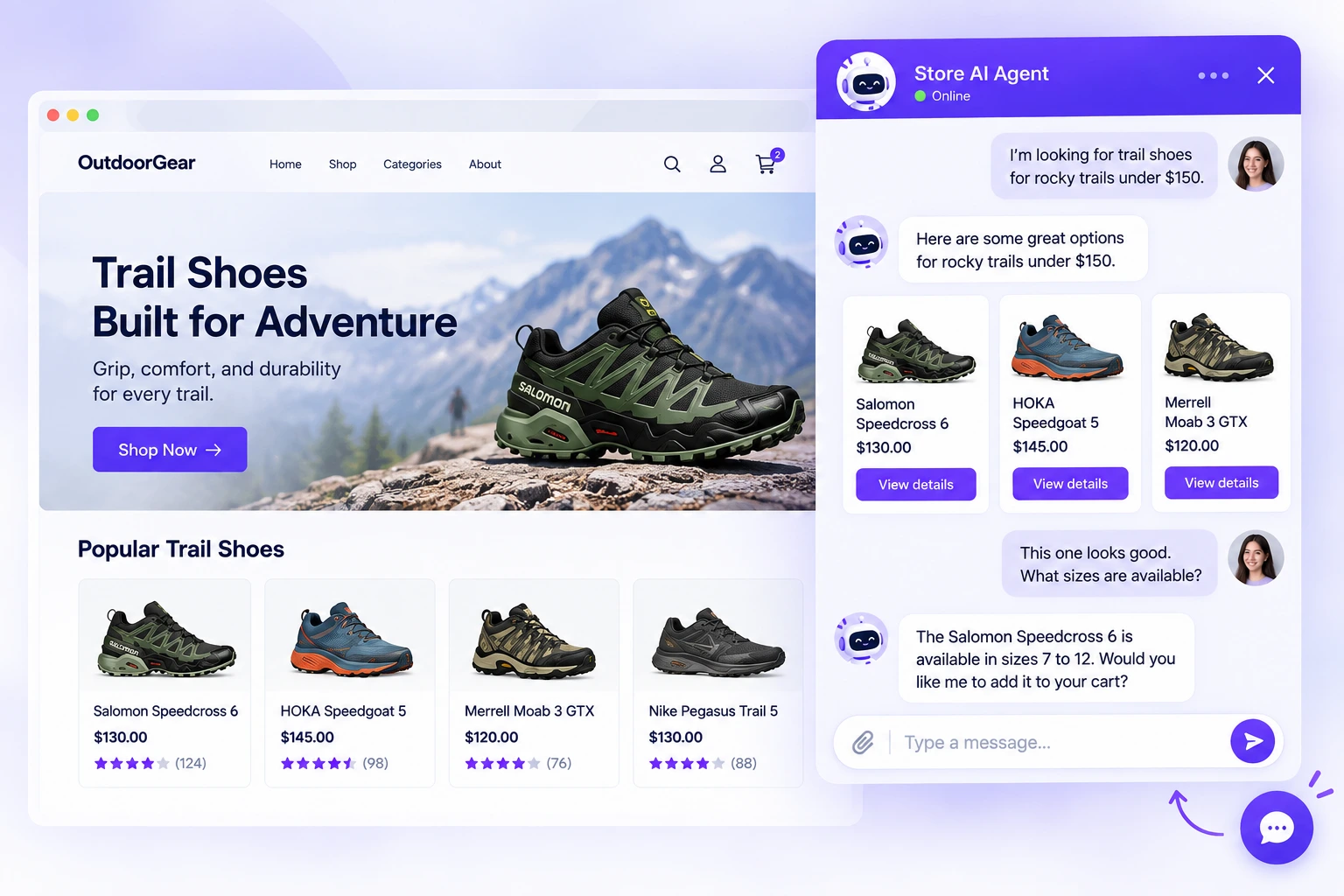
Setup needs no code. You choose the agent’s name, avatar, position, and brand color. Each conversation turn costs 1 credit from your EasyCommerce balance, and EasyCommerce charges zero transaction fees on your sales.
Because the agent answers from your live catalog, it avoids the problem outside agents keep running into. It knows exactly what you sell and what’s in stock.
Sell Where Global Shoppers Already Chat
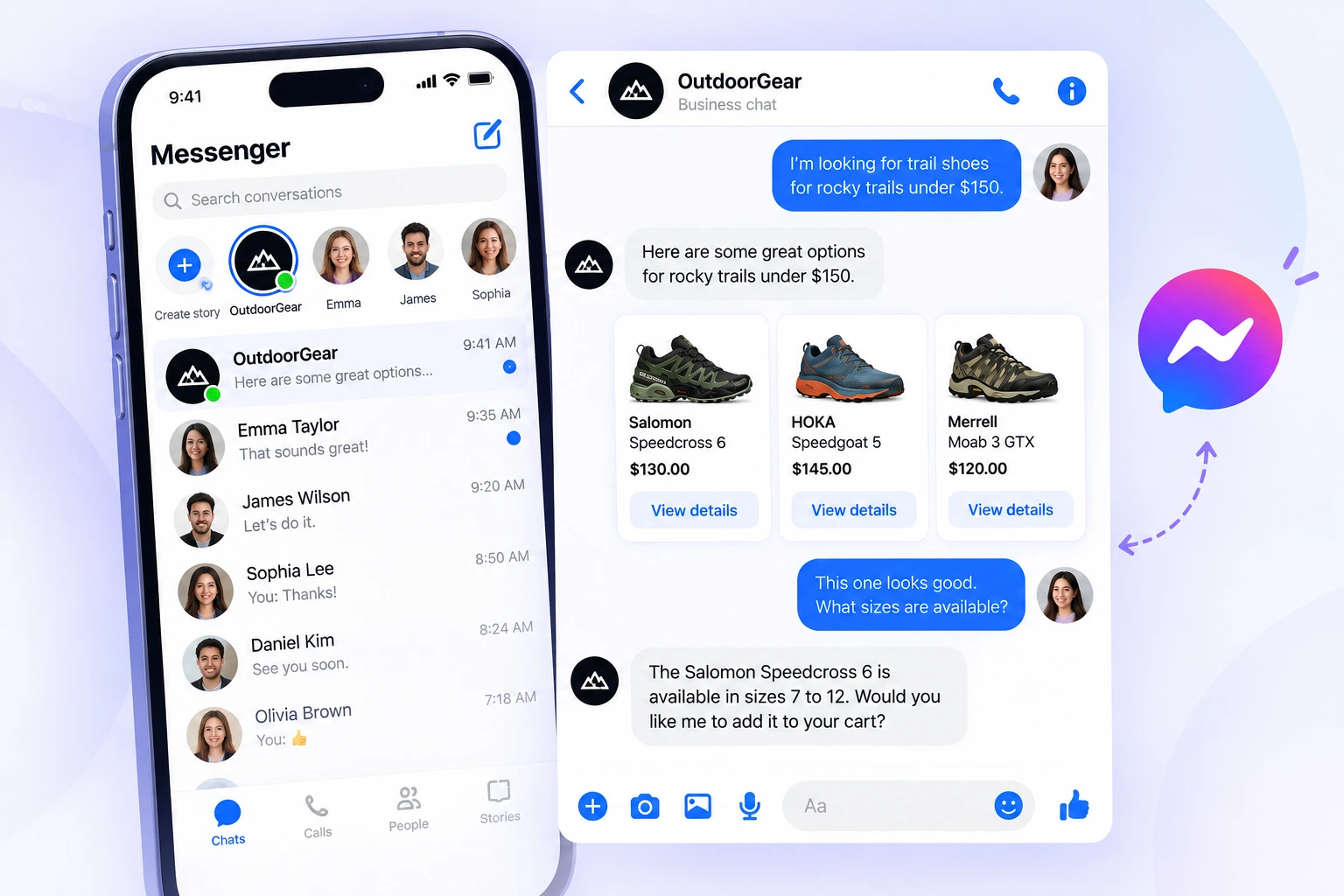
Plenty of shoppers never visit a store’s website first. They send a message. The Multi-Channel Agent connects the same shopping agent to Facebook Messenger through an add-on, keeping the full flow from product search to payment link inside the chat, with WhatsApp support planned.
For stores selling across borders, meeting customers in the apps they already use is often easier than pulling them to a website.
Full EasyCommerce Agentic AI Suite Breakdown
The Shopping Agent is one part of a larger set. Some of these agents serve shoppers, one helps you run the store, and one connects outside AI tools to your catalog.
| Agent | Who It Serves | What It Does | Status |
| AI Shopping Agent | Shoppers | Chats, searches, and completes purchases | Available |
| Multi-Channel Agent | Shoppers | Runs the same agent in Messenger, with WhatsApp planned | Available (addon) |
| AI Smart Search | Shoppers | Typo-tolerant search that understands synonyms | Available |
| AI Voice Search | Shoppers | Lets customers find products by speaking | Coming soon |
| AI Product Recommendation | Shoppers | Personalized suggestions on product pages, in the cart, and in emails | Coming soon |
| AI Store Copilot | Store owner | Answers revenue questions and manages orders, stock, and coupons by chat | Available |
| MCP Server | Outside AI tools | Connects Claude, Cursor, and other MCP clients directly to your WordPress store | Available |
Until AI Product Recommendation ships, the Shopping Agent already suggests relevant products inside the chat as customers shop.
Outside agents still matter, and they read the same product data your own agent uses. Clear, specification-rich listings help both. The AI Copy Writer and AI Attribute Generator speed that work up across a large catalog. For the full list of what to fix, see our guide on how to prepare your WordPress store for AI agents. If you’re weighing platforms, you can also compare EasyCommerce with other ecommerce plugins.
Conclusion
AI shopping agents have moved from answering questions to taking action. Three points are worth keeping in mind:
(i) An agent acts; a chatbot only talks
(ii) Shoppers want help deciding, but most still want to approve the payment
(iii) Shoppers trust a store’s own agent far more than an outside one
You can’t control how ChatGPT or Gemini describes your store. You can control the agent on your own storefront. Get EasyCommerce free and put an AI Shopping Agent to work on your WordPress store.
Before you go, try one quick test. Open your store and type the question a real customer would ask into your search bar. If the answer isn’t instant and accurate, that’s your first thing to fix.
Frequently Asked Questions
AI shopping agents can be safe when used with trusted retailers and secure payment methods. Check product details, prices, and order totals before approving a purchase.
Most AI shopping agents require approval before checkout. Some allow automatic purchases if you enable them and set spending limits or buying conditions.
AI shopping agents can help small stores answer product questions and guide shoppers when staff is unavailable. Start with accurate, complete product data to support reliable answers.
No. AI shopping agents help customers find and buy products, but online stores still manage inventory, fulfill orders, and handle returns.