Almost everyone you know buys something online now, and that habit is not slowing down.
By 2025, around 2.77 billion people shopped online worldwide, according to Shopify. Global retail ecommerce is on track to reach roughly $6.88 trillion in 2026, per Capital One Shopping’s research.
The buyer pool is already huge, and it keeps growing.
Here is the catch. Most “online business ideas” lists run 50 items deep and tell you almost nothing you can act on.
They skip the three things that actually decide if you make money: what it costs to start, what margin you keep, and how hard it is to land your first sale.
This guide fixes that. Below are eight successful online businesses to start in 2026, each with a real cost range, a margin reality, and the honest catch.
What Makes an Online Business Succeed in 2026
A successful online business in 2026 is not a clever idea. It is a defined niche with proven demand, margins that survive real costs, and a marketing habit you keep up for months. The idea is maybe 10% of it. Execution is the rest.
Here is what separates the stores that last from the ones that quit in month two.
A niche, not a category. “Fitness gear” is a category. “Compact home-gym equipment for small apartments” is a niche. The narrower you go, the easier you are to market and the less you compete on price.
Validated demand. Before you build anything, confirm people actually want this. Search volume, marketplace sales, an ad test, and a waitlist. Any real signal beats a gut feeling.
Margin math that works. Revenue means nothing until you subtract product cost, shipping, payment fees, and ad spend. A model that looks profitable on paper can lose money on every order. Run the numbers first.
Simple fulfillment. The more moving parts between a customer paying and receiving, the more they can break. Models with fewer steps tend to survive longer.
A way to get customers. Even in the US, where online sales are close to 17% of all retail, per the US Census Bureau, nobody finds your store by accident. You need one reliable channel that sends buyers your way.
Consistency over idea-hopping. This is the quiet one that kills the most stores. People switch models every few weeks and never give one enough time to work. Pick one and commit. If you want the full picture first, it helps to understand what ecommerce actually is before you choose.
Online Business vs. Ecommerce Business: What’s the Difference?
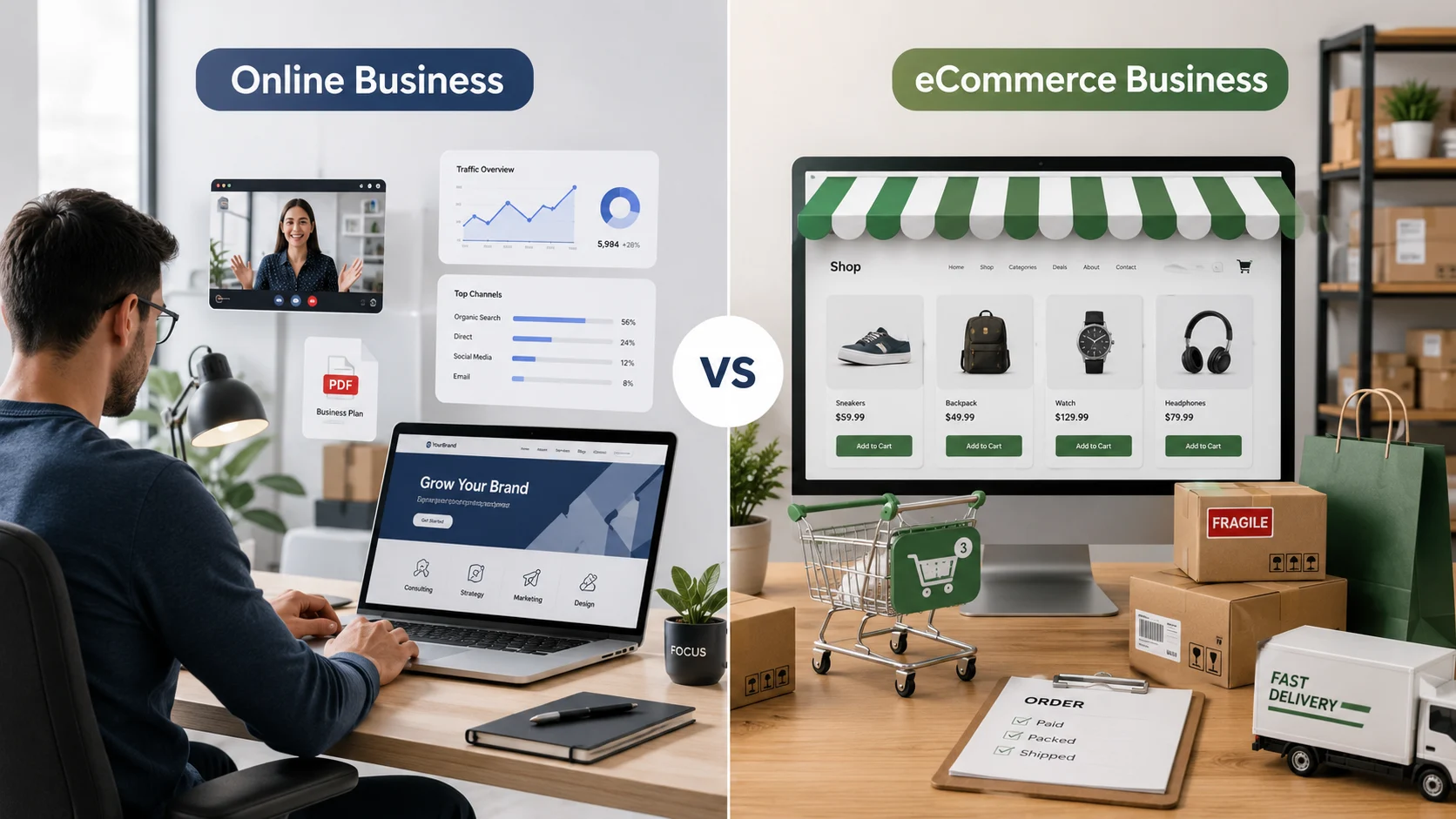
An online business earns money mainly through the internet. An ecommerce business is one type of online business, the kind where customers buy products, downloads, subscriptions, or services through an online store or checkout.
Every ecommerce business is an online business. Not every online business is ecommerce. A freelance writer working over email runs an online business, but not an ecommerce one. The moment you add a cart, a payment button, or a checkout page, you have crossed into ecommerce.
Why does this matter for your choice?
Because ecommerce models give you something the others do not: a store you own, a repeatable sales process, and an asset that keeps selling while you sleep. Most of the eight models below can be run this way, and that is the point. You are not trading hours for money. You are building something that sells on its own.
Successful Online Businesses to Start With Little or No Inventory
These four models share one advantage: you do not sink money into stock you might not sell. That keeps your risk low and your first test cheap. Good places to start if your budget is tight.
Dropshipping
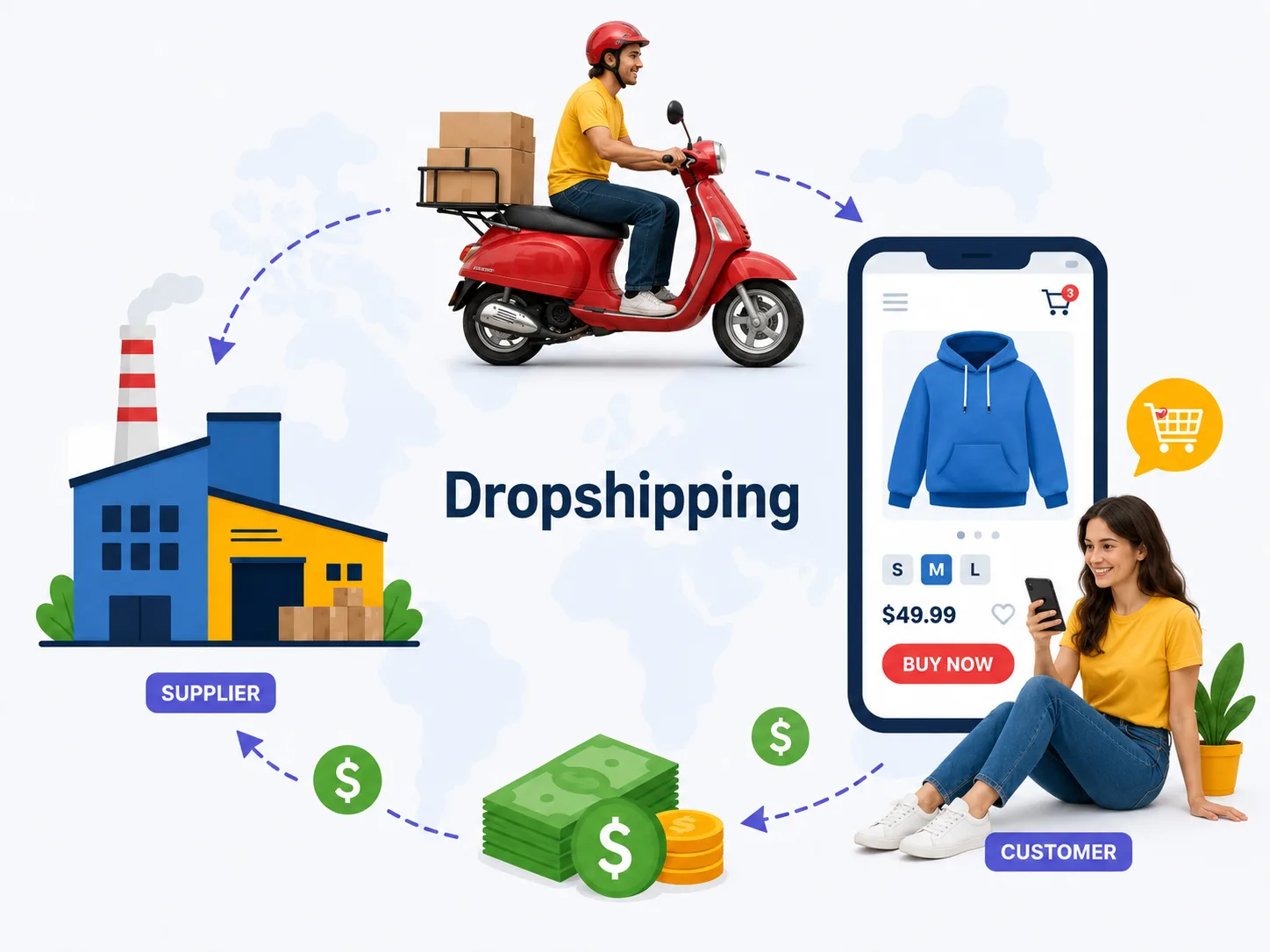
You sell products you never touch. A customer orders from your store, you forward the order to a supplier, and they ship it. You keep the difference.
- Best for: people who are good at product research and paid ads, and can test fast without getting attached to a product.
- Startup cost: low. A store, a domain, and an ad budget. Under $200 if you build the store yourself.
- Typical margin: thin. 10% to 30% is common once ad costs come out.
- Time to first sale: fast, sometimes within days of running ads.
- Main risk: you do not control quality or shipping speed. A slow supplier becomes your problem, and it lands in your reviews.
- How to start in 2026: validate before you commit. Run a small TikTok or Meta ad set, or check marketplace sales volume, before you build a full catalog. Pick one product you can explain in a single sentence.
To learn more, read this complete guide on what dropshipping is and how to start.
Print-on-Demand
You upload designs. A print partner makes each product only after someone buys, then ships it. No inventory, no leftover stock in your garage.
- Best for: designers, illustrators, and creators with a point of view or an audience.
- Startup cost: low. Often just a store and the hours you spend designing.
- Typical margin: modest. The print partner takes a cut per unit, so you work with what is left.
- Time to first sale: fast.
- Main risk: thin per-unit margins and a flood of lookalike stores. Generic designs sink without a trace.
- How to validate: post designs on Pinterest, Etsy, or social first. If a design gets saved and shared, it will probably sell. Demand is real here: the print-on-demand market is valued at roughly $13 to $15 billion in 2026 by Printify, and so is the competition.
Digital Products
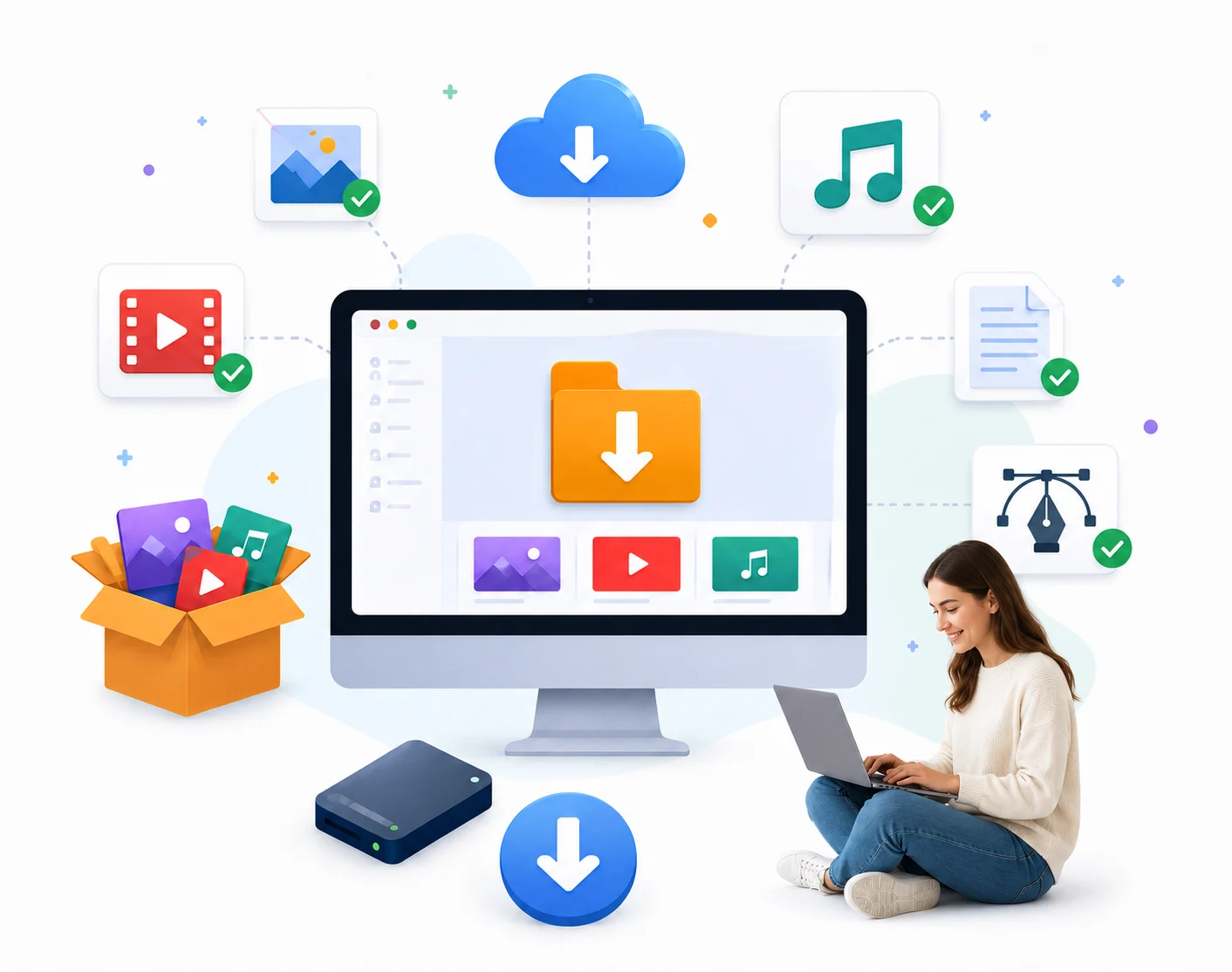
Ebooks, templates, presets, Notion systems, stock assets, printables. You make it once and sell it forever. No unit cost, no shipping, no restocking.
This is one of the strongest models on the list, and I do not say that lightly. Margins run close to 100% because there is nothing to replace after a sale. A large part of the creator economy, valued at $250 to $480 billion in 2025, runs on exactly this kind of product.
- Best for: creators, marketers, designers, educators, and anyone with a niche skill.
- Startup cost: very low. Mostly your time.
- Typical margin: very high.
- Time to first sale: medium. You need an audience or search demand to find you.
- Main risk: no audience means no sales, even with a great product sitting there.
- How to validate: check search demand for the problem you solve, or float the idea to a community or a waitlist before you build it.
Online Courses
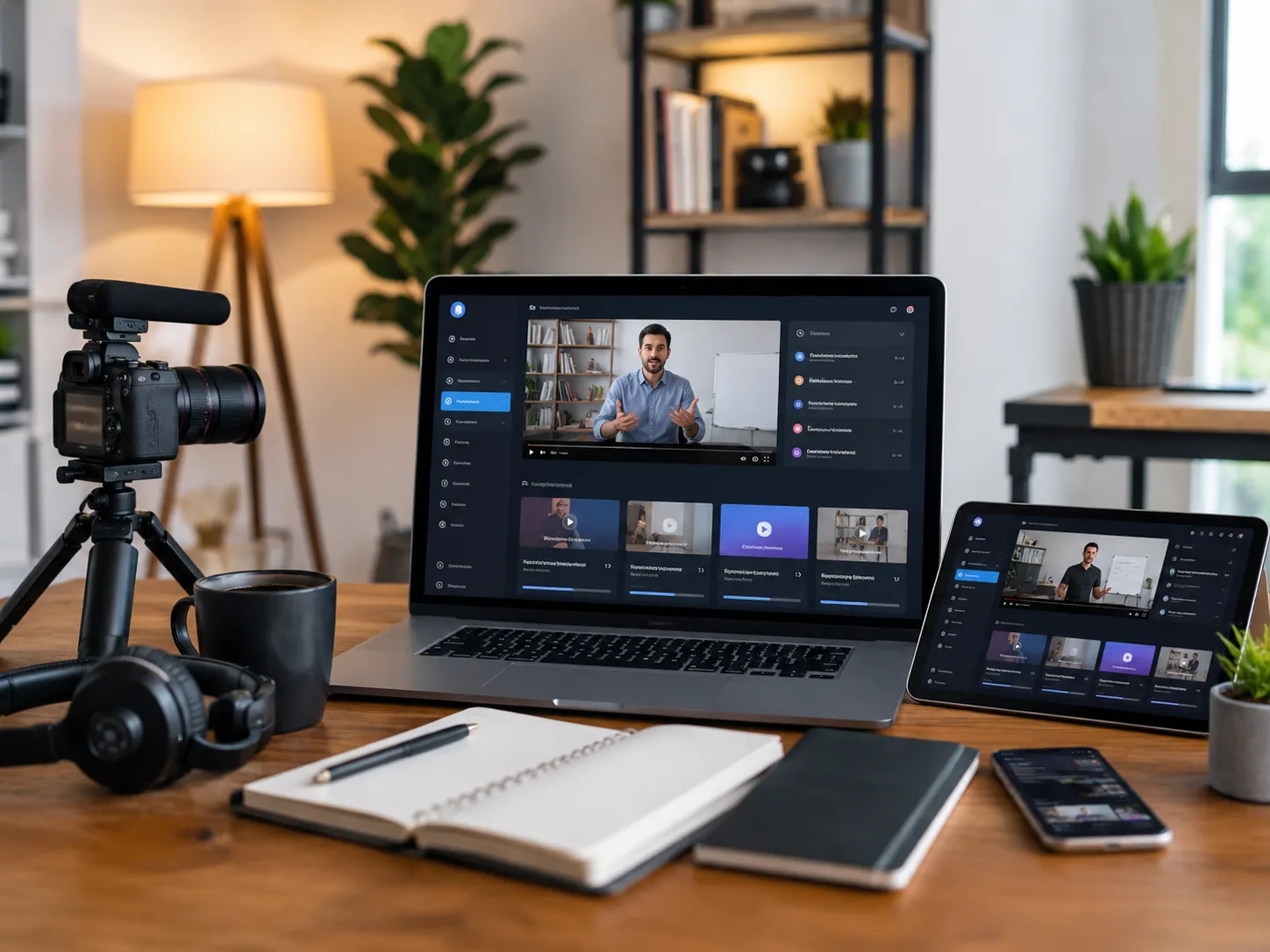
You package what you know into a structured course and sell access. Same high-margin logic as digital products, with more upfront work to build it.
- Best for: people with real expertise and some proof they can teach it.
- Startup cost: low to medium. Recording gear and a hosting setup.
- Typical margin: high.
- Time to first sale: slow to medium. Trust takes time to build.
- Main risk: courses are hard to sell cold. Without an audience or a track record, they sit unbought.
- How to validate: sell a paid workshop or a short mini-course first. If people pay for the small version, build the full one.
Successful Online Businesses That Build a Long-Term Brand
These four ask more of you upfront, in effort or capital. In return, they build something you own: a brand, a customer base, and repeat buyers who come back without an ad chasing them.
Handmade and Craft Goods
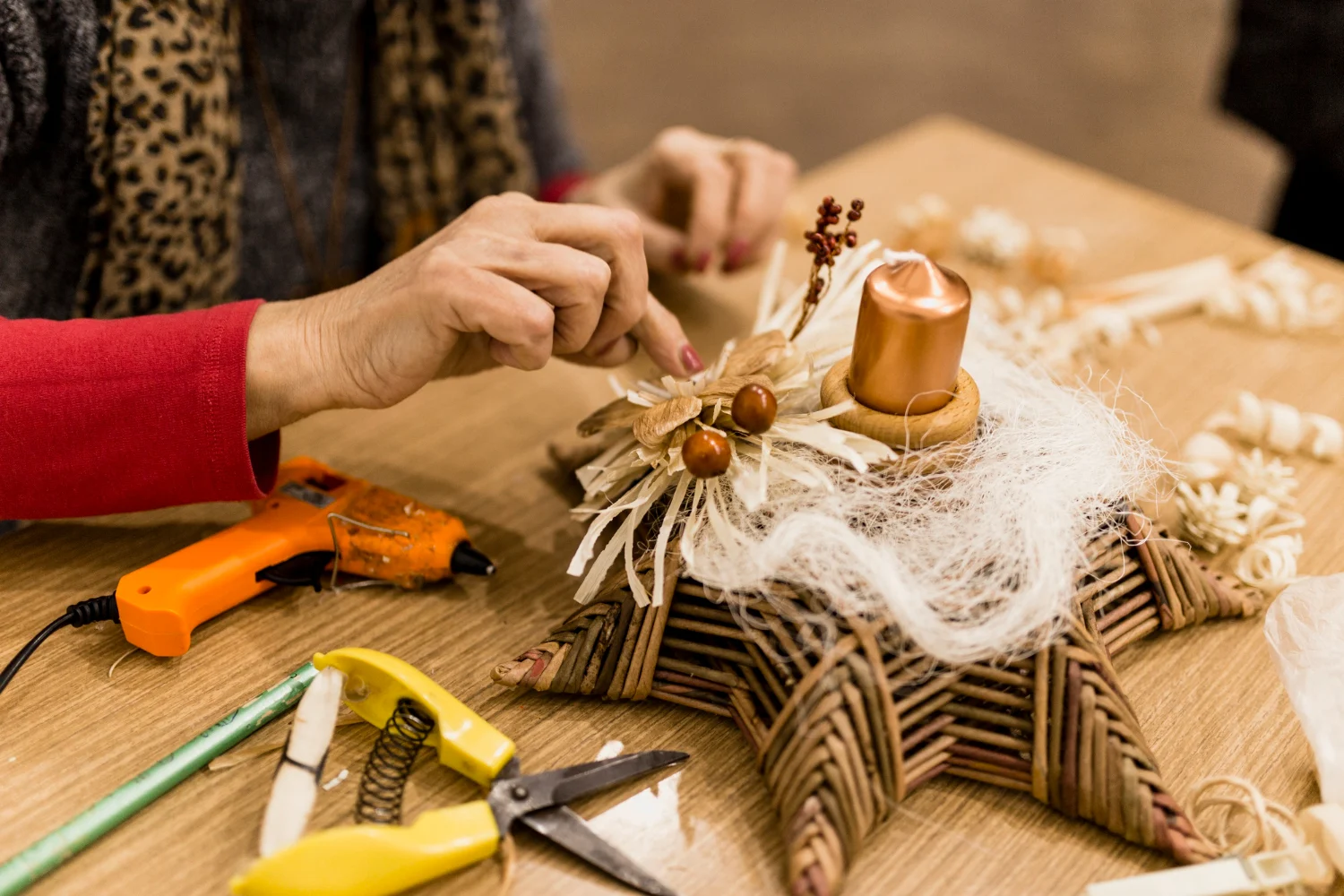
You make it, you sell it. Jewelry, candles, ceramics, art, custom pieces. Buyers pay a premium for something they cannot get from a big-box shelf.
- Best for: makers and hobbyists ready to treat the craft as a business.
- Startup cost: low to medium, mostly materials and tools.
- Typical margin: medium to high, if you price your time properly. Most makers do not, and it quietly eats their profit.
- Time to first sale: medium.
- Main risk: you can only make so much by hand. Your own time is the ceiling on the whole business.
- How to validate: sell a small batch at a fair, through preorders, or on social before you scale up production. A lot of this discovery happens on social now, where social commerce reached about $819.8 billion in 2025.
Private Label Products
You take a generic product, brand it as your own, and sell it under your name with your packaging. A water bottle, a supplement, a kitchen tool, made by a manufacturer, sold as yours.
- Best for: people with a bigger budget who want real brand equity, not a quick flip.
- Startup cost: medium to high. You buy inventory upfront.
- Typical margin: medium to high, once you hit volume.
- Time to first sale: slow. Sourcing, samples, and branding take weeks.
- Main risk: you pay for stock before you know it sells. That is the whole risk in one sentence.
- How to validate: study competitor reviews for a product people already buy. Find the complaints, then sell the version that fixes them.
Subscription-Based Business
You sell access or delivery on a recurring schedule. That can be a physical product box, a digital membership, a paid community, a monthly resource drop, or a refill service for something people run out of.
- Best for: people who can keep delivering value month after month.
- Startup cost: medium, and it swings a lot by model.
- Typical margin: medium, and it compounds. Recurring revenue is the prize.
- Time to first sale: slow to medium.
- Main risk: churn. Getting subscribers is hard. Keeping them is harder.
- How to validate: launch with a founding-member tier at a discount. If people stay past month two, you have something worth scaling.
Niche Single-Product Store
One product, one store, one clear promise. A posture corrector, a pet accessory, a skincare tool, a desk gadget. The narrow focus is the whole strategy.
- Best for: people who found one product with a sharp hook and want to go all-in on it.
- Startup cost: low to medium.
- Typical margin: medium to high, because a focused store converts better than a cluttered one.
- Time to first sale: fast to medium.
- Main risk: one product means one point of failure. If demand dries up, so does the store.
- How to validate: run traffic to a simple landing page and measure interest before you stock up. You can build a single-product website quickly and test the offer for real. The same focus works for a specialized catalog too, like when you start an online grocery store built around one category.
Which Online Business Model Is Best for You?
There is no single best model. There is a best model for your budget, your skills, and your goal. Match yourself to the row that fits.
| Your Goal | Best Model |
| Lowest startup cost | Digital products, print-on-demand |
| Fastest to test | Dropshipping, single-product store |
| Best profit margin | Digital products, online courses |
| Best for a long-term brand | Private label, handmade goods |
| Best for recurring revenue | Subscription-based business |
| Best for beginners | Print-on-demand, digital products |
If two rows point to the same model, that is your signal. Start there.
How Much Does It Cost to Start an Online Business?
You can start most online businesses for under $500, and some for close to nothing. Digital products and print-on-demand need little more than your time. Dropshipping needs a small ad budget. Inventory-based models like private label need the most upfront, often $1,000 or more, because you buy stock before you sell it.
For a full breakdown by business type, see this guide on the real cost to start an online business.
Here is how the eight models compare at a glance.
| Business Model | Startup Cost | Typical Margin | Time to First Sale | Difficulty |
| Dropshipping | Low | Low to medium | Fast | Medium |
| Print-on-Demand | Low | Low to medium | Fast | Easy to medium |
| Digital Products | Very low | High | Medium | Medium |
| Online Courses | Low to medium | High | Slow to medium | Hard |
| Handmade Goods | Low to medium | Medium to high | Medium | Medium |
| Private Label | Medium to high | Medium to high | Slow | Hard |
| Subscription-Based | Medium | Medium | Slow to medium | Hard |
| Single-Product Store | Low to medium | Medium to high | Fast to medium | Medium |
Treat these as ranges, not promises. Your real numbers depend on niche, pricing, traffic, and how well you execute. The store itself is usually the smallest line item. If you build on WordPress, you can see what a WordPress ecommerce site really costs and plan around it.
How to Launch Your Online Business in 5 Steps
The path is the same across every model on this list. Five steps, in order.
- Choose a model that fits your budget and skills. Use the decision table above. Do not pick the trendiest option. Pick the one you can actually run.
- Validate demand before you build the full store. Run an ad test, check search volume, or open a waitlist. Spend a little to learn a lot.
- Choose products, pricing, and fulfillment. Set your prices with margin in mind, not just what competitors charge. Decide who ships, and how.
- Set up your store. This is where a platform does the heavy lifting. A WordPress plugin like EasyCommerce lets you add products, payments, orders, and checkout without building anything from scratch or hiring a developer. And no, you do not need to write code to run a modern online store.
- Launch on one focused channel. Pick a single channel and go deep before you add a second. Make it mobile-first: mobile drives about 59% of ecommerce sales, so your store has to feel effortless on a phone.
Common Mistakes New Entrepreneurs Make
Most stores do not fail because the idea was bad. They fail on avoidable mistakes. Here are the ones I see most often.
- Chasing saturated products. Copying whatever is trending on TikTok this week means competing on ads you cannot afford against sellers who got there first.
- Skipping validation. Building the full store, logo, and catalog before confirming a single person wants the product. Test first, build second.
- Competing on price. A race to the bottom against sellers with deeper pockets. A sharp niche beats a lower price almost every time.
- Ignoring margins. Revenue looks great until shipping, fees, and ad spend eat it. Know your real margin per order before you scale.
- Marketing everywhere at once. Five channels run at half-effort lose to one channel run well. Focus wins.
- Quitting too early. Most stores that fail do so before they have given one channel a real 90 days to work. Momentum is slow, then sudden.
Final Word
Eight models, one truth: the best online business to start in 2026 is the one you will actually stick with. Select a model that fits your budget, validate it before you build, and allocate sufficient time for one marketing channel to yield results.
The market is on your side. Statista projects the US online retail market to pass $1.2 trillion in 2026, and the tools to start have never been cheaper or simpler. What is left is the decision to begin. Choose one model from this list, commit to it past the first 90 days, and you are already ahead of everyone still reading their fiftieth ideas list.
Frequently Asked Questions
Digital products and online courses tend to be the most profitable, because margins run close to 100% with no unit cost or shipping. You create the product once and sell it repeatedly. The catch is distribution: high margins mean nothing without an audience or search demand to bring buyers in.
Print-on-demand and digital products are the friendliest for beginners. Both have low startup costs, no inventory to manage, and simple fulfillment. You can launch either one this week with a store and a few hours of work, then learn as you go without much money at risk.
Digital products, print-on-demand, and dropshipping can all start for under $200. Digital products cost the least, since you only invest your time. Dropshipping and print-on-demand need a store and a small budget for ads or design. None require you to buy inventory upfront, which is where most of the real cost usually hides.
Yes. Ecommerce is still growing, not shrinking. Global retail ecommerce is forecast near $6.88 trillion in 2026, and online sales keep taking a larger share of total retail each year. Profitability comes down to your niche, your margins, and your marketing, not the size of the market. The opportunity is there. Execution decides who captures it.