A recent analysis of 146,271 Gumroad products found that 44% had never made a single sale. The median creator earns just $72/month, while the top 1% capture nearly 99.5% of revenue.
The problem isn’t selling digital products-it’s selling generic products.
Software and business tools are already generating millions because they solve specific problems. A generic “Complete Marketing Guide” competes with free content everywhere. But a spreadsheet that saves a store owner three hours every week? That solves a clear problem.
The key is simple: build something people actually need.
Here are 15 digital products worth building in 2026.
What Is a Digital Product?

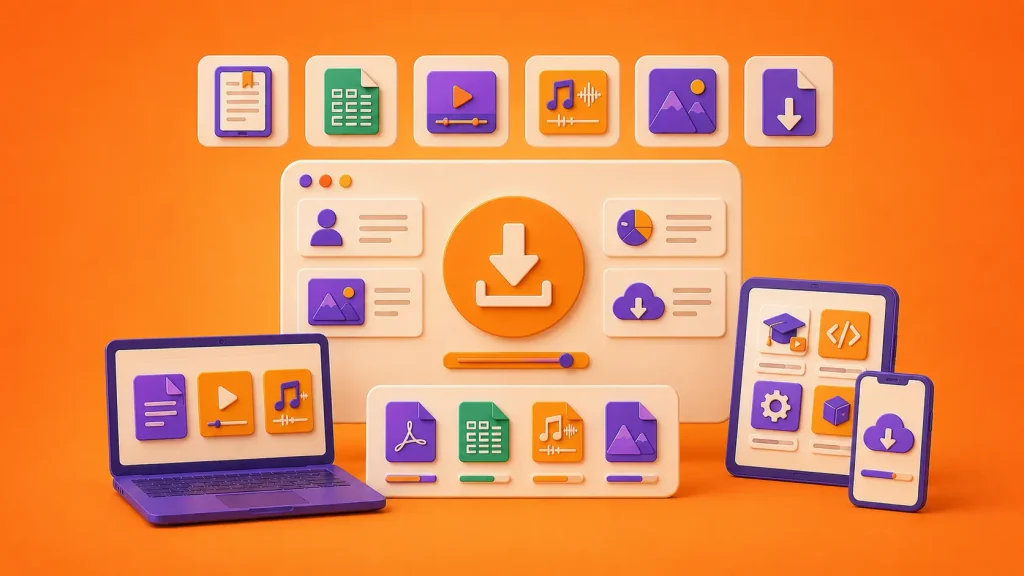
A digital product is something customers buy and receive electronically instead of as a physical item: ebooks, courses, templates, software, plugins, design assets, memberships, stock photos, printables, and spreadsheets.
Because there is nothing to manufacture or ship, the same file sells a thousand times at close to zero marginal cost once the store is set up properly.
Delivery was never the hard part. Creating something people will actually pay for is.
15 Best Digital Products to Sell
Not sure what kind of digital product you should sell? Start with something that solves a problem people already have.
Here are 15 ideas you can create, sell, and grow with in 2026.
1. Online Courses

Online education is projected to generate around $220 billion globally in 2026. A tiny slice of that builds a business.
Courses sell well in WordPress development, SEO, design, photography, Excel, freelancing, paid ads, cooking, fitness, and languages.
What separates a course that sells is the promise. “Learn Photoshop” is a category. “Create Professional Product Photos in Photoshop in One Weekend” is a purchase decision.
The average course price in that Gumroad data was $95.74, but courses tied to a professional outcome routinely clear $500. People pay more when the skill pays them back.
Best for: Teachers, marketers, developers, consultants, subject-matter experts.
2. Ebooks and Guides

Ebooks are the fastest digital product to create and the easiest to get wrong.
Paid ebooks deliver specialised knowledge, a structured process, or experience that is genuinely hard to assemble elsewhere. Free ones deliver what Google already gave away.
Instead of The Complete Guide to Marketing, build A 30-Day Local Marketing Plan for Independent Dental Clinics.
Same writing effort. The second one sells to a person who knows immediately it was written for them, and it can charge four times as much for it.
Length is not the value either. A 40-page ebook that hands someone a working process outsells a 300-page one that explains theory. Buyers are paying to skip the learning curve, not to read.
The formats that hold up are the ones tied to a job: industry reports, playbooks with templates attached, study guides for a named exam, and technical documentation nobody else has bothered to write properly.
Best for: Writers, consultants, educators, niche experts.
3. Business and Productivity Templates
Templates work because buyers are not paying for a file. They are paying to skip the blank page.
The markets worth building for:
- Canva and Figma, for anyone selling to marketers
- Notion, where the buyer wants a system, not a page
- Google Sheets and Excel, still the highest-value template market
- PowerPoint and Google Slides, especially for agencies and consultants
- WordPress, email campaigns, and social post packs
Business templates command the best prices. An ecommerce operator will buy inventory sheets, launch checklists, marketing calendars, and profit calculators, because each one replaces an afternoon.
The test: does it get someone to a finished result faster than starting from scratch? If it only looks nice, it is a design sample, not a product.
Best for: Designers, marketers, project managers, consultants.
4. AI Workflows and Automations

AI created a product category in about eighteen months, then flooded it.
Dropping 500 generic prompts into a PDF was a good business in 2024. In 2026 it is close to worthless, because the model will generate those prompts for free if you ask nicely.
What still sells is AI packaged around a specific outcome: Sell Make or Zapier automation templates, AI agent configurations, tested prompt chains, Claude/ChatGPT project setups, n8n workflows, or complete AI operating systems for specific jobs.
You are not selling prompts. You are selling a repeatable way to finish a job. Anyone can write a prompt. Far fewer can hand you a tested sequence that performs the same on the fiftieth run as the first.
This is where agentic commerce is heading generally: software that acts rather than answers.
Best for: AI consultants, marketers, automation specialists, operators with domain depth.
5. WordPress Plugins

Software was the highest-earning category in that Gumroad analysis at $65.8 million, and plugins are the most durable version of it.
Plugins solve narrow, recurring pain: ecommerce, SEO, affiliate management, image optimisation, forms, security, bookings, automation.
They fit recurring revenue naturally. An annual licence covering updates and support compounds in a way one-time sales never will. A free version on WordPress.org gets you in front of people who already have the problem.
Here is the part nobody tells you: We build WordPress plugins at Codexpert, and the products that earned money were never the clever ones. They came from the same complaint appearing in the support inbox for the fourth week running. The idea was already written down. We just had not read it as a product brief.
If you are weighing this against building a store, our guide on selling on WordPress without WooCommerce covers the trade-offs.
Best for: Developers, agencies, software companies.
6. SaaS Products

SaaS sells software access on a recurring subscription: analytics, AI tools, SEO platforms, schedulers, email platforms, accounting, monitoring.
It is the hardest product here to launch, and it is not close. An ebook is finished when you stop writing. SaaS is never finished, and customers churn the moment it feels neglected.
The payoff is that you stop hunting new buyers every month. Revenue becomes something you forecast instead of something you hope for.
Best for: Developers, technical founders, software teams.
7. Design Assets

Icon packs, UI kits, illustrations, presentation designs, mockups, backgrounds, patterns, logo templates.
Businesses and other designers buy these constantly, because building from scratch is expensive and the deadline is always tomorrow.
A generic icon pack is a commodity. “300 Ecommerce Icons for Shopify and WordPress Stores” is something people actively search for.
Bundling changes the economics here more than pricing does. Ten illustrations sell for $19. The same ten packaged with source files, a colour-swap guide, and a commercial licence sell for $79 to the same buyer, because now they can use it on client work without asking you a question first.
Best for: Graphic designers, illustrators, UI/UX designers, agencies.
8. Website Themes and Templates

Plenty of businesses want a professional site without paying an agency. That supports WordPress themes, Elementor templates, Gutenberg patterns, Shopify and Webflow themes, and landing pages.
Vertical focus is where the margin lives: restaurants, SaaS, law firms, photographer portfolios.
A niche template lets a buyer picture their own business inside it in four seconds. A generic one asks them to imagine harder, and most will not bother.
Demo content is what closes the sale. A restaurant template shipped with real menu sections, opening hours, and booking blocks sells better than a prettier one shipped empty, because the buyer can see the finished site instead of a wireframe.
Support is the hidden cost. Themes generate more questions than any other product on this list, so price for it or document heavily.
Best for: Web designers, developers, agencies, no-code creators.
9. Stock Photography
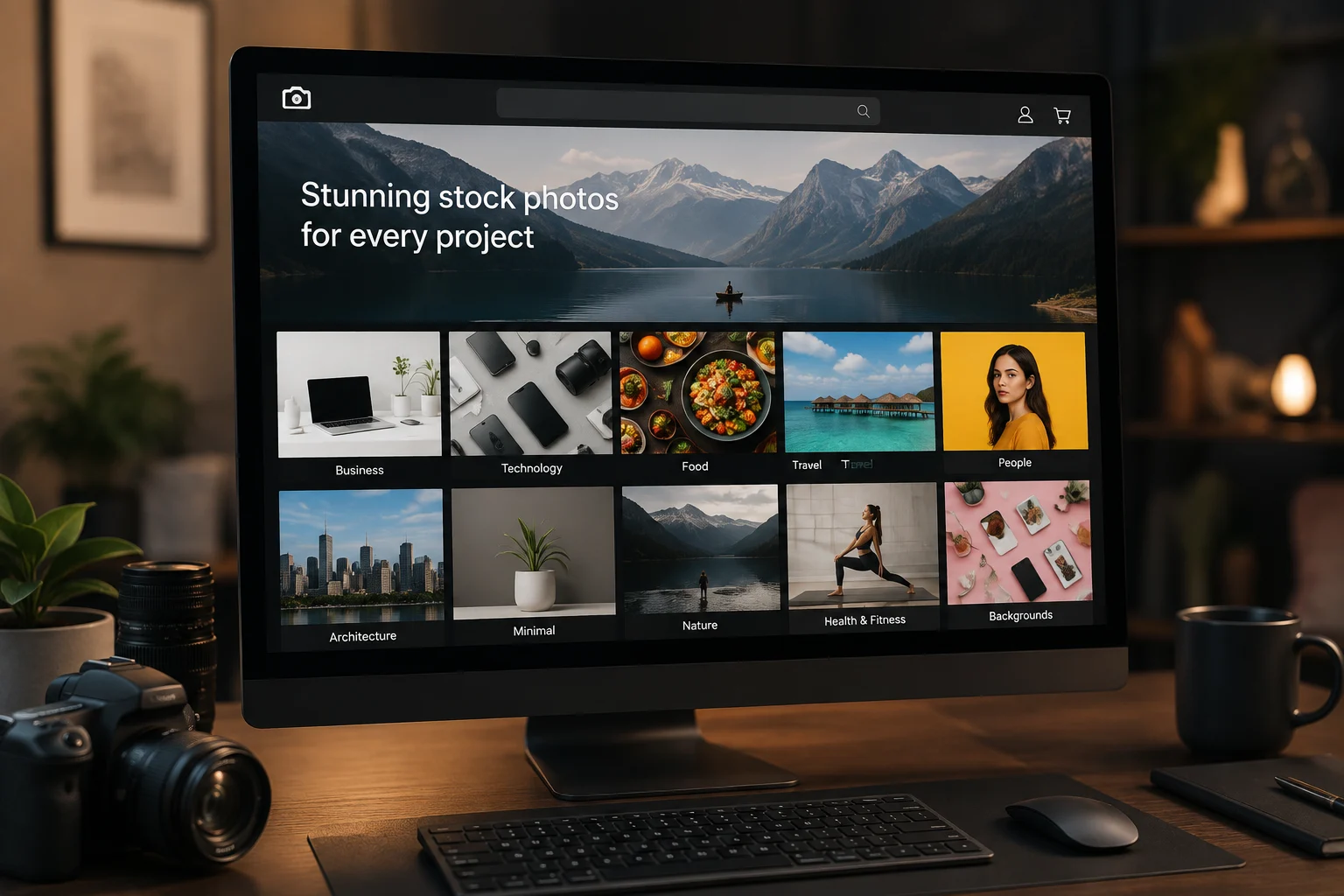
Competing head-on with the enormous generic libraries is a losing position. Specialising is not.
Consider South Asian business photography, SaaS office scenes, healthcare settings, ecommerce product backgrounds, or food photography for one cuisine.
A subscription library that drips new images monthly turns a one-time sale into recurring revenue, which matters more than the per-image price.
The unglamorous advantage is that stock buyers are repeat buyers. A brand that finds photography matching its market comes back every campaign, because switching means their feed stops looking consistent. Very few digital products have retention built in like that.
Shoot for a market the big libraries handle badly, and release in themed sets rather than one image at a time.
Best for: Photographers and visual creators.
10. Video Assets

Short-form video, YouTube, and paid social created steady demand for reusable components: video templates, transitions, motion graphics, LUTs, presets, After Effects files, intros, B-roll.
For a video professional, this is how you stop starting from zero on every client project. The work you already did for one client becomes inventory instead of a folder you never open again.
Demand skews heavily toward whatever platform is growing fastest, so templates cut for vertical video and creator channels move far more volume than broadcast-style packs.
Best for: Video editors, filmmakers, animators.
11. Audio and Music

Sound effects, background music, podcast intros, beats, meditation audio, loops, voice packs, sample libraries.
Licensing is the make-or-break detail. Be explicit about personal versus commercial use, monetised YouTube, and client work. Vague terms generate refunds. Clear ones let you charge more for the commercial tier.
Best for: Musicians, producers, voice artists, audio engineers.
12. Printables

Calendars, invitations, meal planners, worksheets, colouring pages, habit trackers, classroom materials.
They are genuinely easy to produce, which is exactly why the category is saturated.
Targeting rescues them. Instead of another weekly planner, build “Weekly Planner for Freelance Designers.” Same effort, real search intent.
The other lever is the bundle. A single habit tracker is a $4 product with a lot of competition. A twelve-month set with a matching goal review and monthly summary sheets is a $24 product with almost none, because assembling it is work most sellers skip.
Best for: Designers, teachers, parents, creative entrepreneurs.
13. Notion Systems and Digital Workspaces
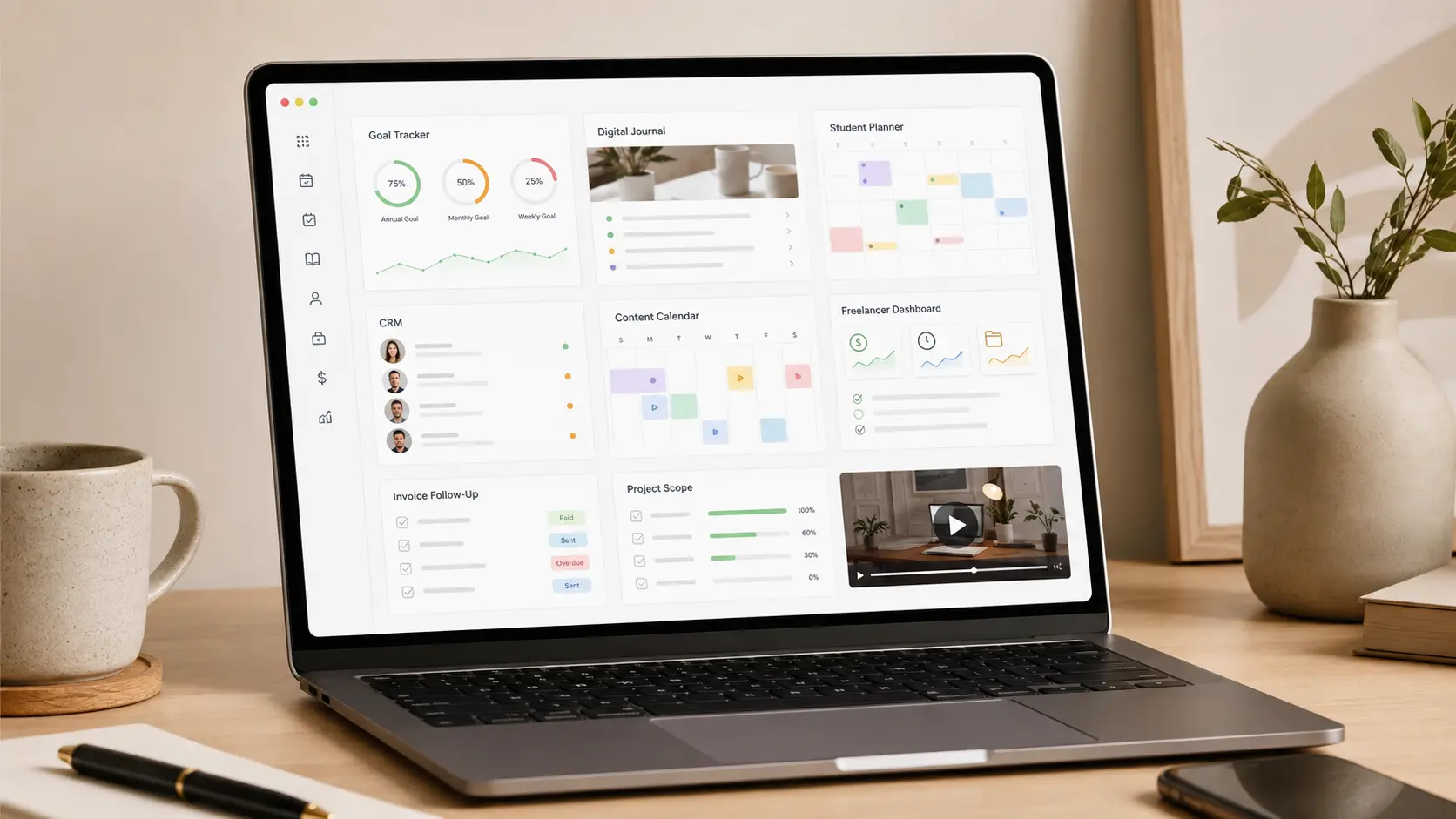
Notion dashboards, digital journals, goal trackers, student planners, lightweight CRMs, content calendars, freelancer dashboards.
The ones that sell do more than look good in a screenshot. They encode a workflow. The buyer is purchasing somebody else’s system for staying on top of something they keep dropping.
Which is why the best sellers in this category are usually built by someone who ran the system for real first. A freelancer dashboard designed by a working freelancer includes the awkward parts: chasing invoices, tracking scope creep- that a designer inventing one from scratch would never think to add.
Include a short setup video. Half the refund requests in this category are people who could not get the template working, not people who disliked it.
Best for: Productivity creators, consultants, project managers.
14. Memberships and Premium Content

Not every product needs to be downloaded. You can sell access: premium articles, research, video lessons, a private community, industry data, monthly workshops.
Recurring revenue is the attraction. Recurring obligation is the cost. Members who stop seeing value cancel quietly.
That makes memberships a strong fit where information genuinely changes: platform updates, market data, regulation, tooling. It is a poor fit for evergreen material someone could buy once. Since retention is the business model, understand what conversion rate actually measures before you price one.
Best for: Educators, communities, analysts, industry experts.
15. Spreadsheets and Calculators
Never underestimate a good spreadsheet.
The ones people actually pay for:
- Pricing and profit margin calculators
- Affiliate or sales commission trackers
- Cash flow and budget forecasts
- Inventory and reorder trackers
- Campaign ROI models
- Freelance rate and project quoting sheets
These are cheap to build and disproportionately valuable, because they attach directly to money. A spreadsheet that helps someone price their work correctly beats a 100-page ebook about pricing, at a fraction of the effort.
Best for: Finance professionals, marketers, consultants, operations experts.
Best Digital Products to Sell at a Glance
| Digital Product | Difficulty | Typical Price | Revenue Model | Ongoing Work | Best For |
| Templates | Low | $9 to $49 | One-time | Low | Designers, beginners |
| Ebooks | Low | $15 to $99 | One-time | Low | Writers, experts |
| Spreadsheets | Low | $19 to $79 | One-time | Low | Business professionals |
| Printables | Low | $3 to $25 | One-time | Low | Designers, educators |
| Digital planners | Medium | $15 to $60 | One-time | Low | Productivity creators |
| Design assets | Medium | $29 to $149 | One-time | Low | Designers |
| AI workflows | Medium | $39 to $299 | One-time or recurring | Medium | Operators, consultants |
| Online courses | Medium | $99 to $999 | One-time or recurring | Medium | Educators, experts |
| Memberships | Medium | $10 to $50/mo | Subscription | High | Creators, communities |
| Website themes | Medium | $39 to $199 | One-time or licence | Medium | Web designers |
| WordPress plugins | High | $49 to $199/yr | Licence or subscription | High | Developers |
| SaaS products | High | $19 to $99/mo | Subscription | High | Technical founders |
One number worth noticing: the $30 to $49 price band converted about 28% better than sub-$10 pricing.
Cheap does not mean easy to sell. It usually means you need ten times the volume for the same money.
The better question is not what is easiest. It is: what can you build that solves a problem people already spend money trying to solve?
Which Digital Products Make the Most Money?
There is no single most profitable product. There is a pattern: demand, value, competition, and pricing model.
That last one is underrated. Products with multi-tier pricing earned roughly twice as much as equivalent single-tier products. Same product, different packaging, double the revenue.
The arithmetic matters more than the category. A $10 printable needs thousands of buyers. A $199 business template needs a few hundred. Software on annual licences needs fewer still and keeps earning from customers it already has.
Look for the overlap between what people need, what you understand better than most, and what you can actually finish.
How to Price a Digital Product?
Most first-time sellers price too low, then conclude the product does not work.
Price against the outcome, not the file size: Nobody cares that your spreadsheet has nine tabs. They care that it replaces four hours a month.
Avoid the sub-$10 trap: It converts worse than the $30 to $49 range and attracts the buyers most likely to request refunds. Low prices signal low value more often than they signal a bargain.
Offer tiers: A base file, a version with templates or video, and a premium tier with support. Most buyers pick the middle. The top tier exists to make the middle look sensible.
Before You Build: Validate It
The most expensive mistake in digital products is spending six weeks building something nobody asked for.
- Do people already pay to solve this? Competition proves budget exists. Search marketplaces, Reddit, Facebook groups, and reviews, then read the complaints specifically. One recurring complaint tells you more than any list of trending ideas, including this one.
- Can you make it specific? Compare Business Spreadsheet with Profit Calculator for Small Ecommerce Stores. The second is also far easier to write a headline for.
- Can you reach the buyers? Work out distribution before you build. Search, YouTube, communities, affiliates, marketplaces, paid ads, and email, which drove around 42% of all sales in that Gumroad data. Start collecting addresses before you have anything to sell.
- Cheapest validation there is: write the sales page before the product. Then pre-sell it to a small list. If ten people buy something that does not exist yet, build it. If nobody does, you saved six weeks.
Where Can You Sell Digital Products?
Two options: an existing marketplace, or your own store.
Marketplaces hand you an audience on day one. In exchange, you give up control over fees, branding, and policy changes you did not vote for. You also do not own the customer list, which is the actual asset.
Your own store inverts that. Slower start; everything compounds. What you get back:
- Pricing and discounts you set, without a platform taking a cut of every sale
- The customer list, which is the only asset that survives a platform changing its mind
- Checkout and branding, so the purchase feels like your business rather than someone else’s
- Repeat buyers, who cost nothing to acquire the second time
That last one is the whole argument. Your second product sells to the list your first one built.
Plenty of sellers run both. The marketplace does discovery; your own store does the relationship.
How to Sell Digital Products with EasyCommerce
If you want the store you own, the path on WordPress is short.
1. Run the setup wizard Three steps: Business, Store, Payment. It creates your shop, cart, checkout, and account pages for you. Fifteen minutes, no developer.
2. Add the file as a Digital Download. One of two product types. Identical to listing a physical product, minus the dimension fields, since a file has no shipping weight.
3. Let delivery run itself. After checkout, the buyer lands on their Customer Dashboard and downloads from Your Orders > Downloads. Nothing to send manually.
4. Scale up when you outgrow one-off files. The Subscriptions add-on handles recurring billing. License Manager handles software keys.
5. Put the AI agent to work. It answers buyer questions on your storefront and closes orders while you are offline. No other WordPress ecommerce plugin ships one.
Turn on abandoned cart recovery on day one too. Digital checkouts leak just as much as physical ones.
One Thing to Sort Out Early: Tax
This catches almost every first-time seller.
If you sell digital products to consumers in the EU or UK, VAT is charged based on where your buyer is, not where you are. For a business established outside the EU there is no registration threshold at all. VAT is due from the very first sale.
EU rates run from 17% to 27%. The UK standard rate is 20%.
The practical route for most small sellers is the Non-Union OSS scheme: register once, file one quarterly return covering all 27 member states.
Not complicated to set up. Very unpleasant to discover eighteen months in.
Start With One Useful Product
You do not need 50 products. You need one that works.
Find people whose problems you actually understand. Identify something they repeatedly waste time, money, or patience on. Build the thing that makes it easier. It might be a $9 printable or software on an annual licence. The format matters far less than the specificity.
Remember the number this article opened with. Forty-four percent of products on that platform never sold once. Almost none failed because the file was badly made. They failed because nobody could tell who they were for.
Pick your person. Solve their problem properly. Then put it somewhere you own.
Still deciding what to build? Our roundup of successful online businesses to start covers the wider options. When you are ready to sell, EasyCommerce turns a WordPress site into a digital storefront in an afternoon.
Frequently Asked Questions
Online courses, ebooks, templates, spreadsheets, software, WordPress plugins, design assets, memberships, and AI workflows are strong options. The best choice depends on your skills, audience, and demand.
Templates, ebooks, printables, and spreadsheets are among the easiest to start with. They require less technical skill and upfront investment than software or SaaS.
Software, courses, memberships, and specialised business tools can be highly profitable because they support higher prices or recurring revenue. Profitability ultimately depends on demand, pricing, and costs.
Yes. You can sell directly from your own website and keep control over pricing, branding, checkout, and customer relationships.